
Novel Food questions often appear late in supplement projects, usually after a brand has already selected a trendy ingredient. That timing is risky. If an ingredient is not authorized for the intended EU use, the project may need reformulation, market limitation or a new regulatory route.
This article is written for supplement brands, sourcing teams and raw material buyers evaluating new ingredients for Europe or other regulated export markets.
What Is a Novel Food in the EU?
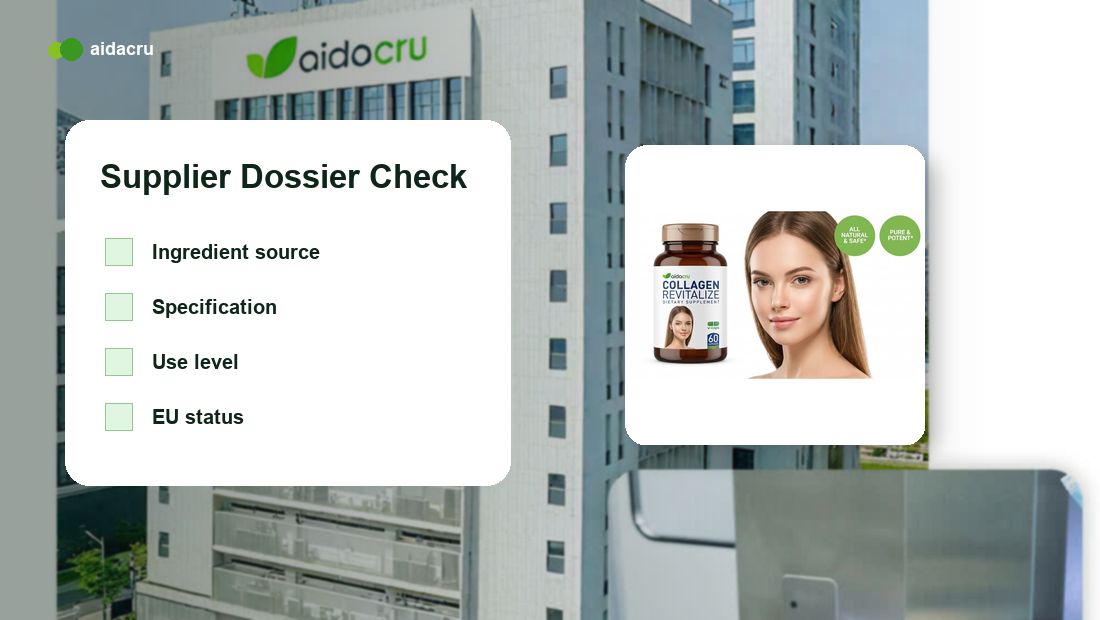
The European Commission describes Novel Food as food that had not been consumed to a significant degree by humans in the EU before 15 May 1997. The category can include new sources, new production processes, new extracts, new concentrates and new use conditions. The practical point for brands is simple: "natural" does not automatically mean "already permitted for your intended use."
Official reference: European Commission Novel Food overview.
Supplier Questions Before You Build the Formula
| Question | Why it matters | What to request |
|---|---|---|
| Is this ingredient authorized for the EU? | Authorization may depend on source, specification and use level. | Authorization reference, specification and conditions of use. |
| Was it consumed before 15 May 1997? | History of significant consumption can affect Novel Food status. | History-of-use evidence or supplier regulatory statement. |
| Is the intended use only supplements? | Some ingredients have limited conditions of use. | Permitted food category and maximum use levels. |
| Does the ingredient match the authorized specification? | Different extraction processes or concentrations can change status. | Specification sheet, production process and assay profile. |
Why Ingredient Form and Use Level Matter
A plant may be familiar, while a concentrated extract, isolated compound or new fermentation-derived version may raise different questions. The same ingredient name can also hide meaningful differences in solvent, carrier, concentration, extraction ratio and active profile. That is why brands should review the actual specification, not only the marketing name.
Novel Food Is a Sourcing and Launch-Timing Issue
Registration and authorization timelines can be long. If a brand is trying to launch quickly, it may be better to choose an already familiar ingredient route or limit the product to markets where the ingredient is acceptable. If the brand wants a novel ingredient as its core differentiation, the launch plan should include regulatory review from the start.
Practical Decision Matrix
| Ingredient situation | Risk level | Recommended action |
|---|---|---|
| Common nutrient or well-established botanical form. | Lower | Still request COA, specs, origin and claim review. |
| New extract ratio, concentrated active or unusual source. | Medium | Request regulatory statement and market-specific review. |
| Novel process, new source, synthetic biology or unclear history of use. | Higher | Do not finalize formula until regulatory status is reviewed. |
How Aidacru Helps Brands Reduce Rework
Aidacru can help brands compare raw material documentation, formula feasibility, sample route and market direction before locking packaging. For raw material sourcing, see Supplement Raw Materials. For quality and supplier trust planning, see Supplement Manufacturer Certifications and FDA Registration Guide.
Official references: European Commission Novel Food authorisations and European Commission Novel Food legislation.
Related Aidacru links: Supplement Raw Materials, FDA Registration Guide, Ask Aidacru about ingredient sourcing.
FAQ
What is a novel food ingredient?
In the EU context, Novel Food generally refers to food that had not been consumed to a significant degree by humans in the EU before 15 May 1997, including certain new sources, processes, extracts or uses.
Should supplement brands check Novel Food status before sampling?
Yes. Checking early can prevent reformulation, label delays, market restrictions and wasted packaging work.
Can Aidacru help review raw material documentation?
Aidacru can help collect and compare supplier documents such as COA, specification sheet, origin information and market-use notes before formula sampling.