

How a U.S. Brand Developed 20,000 Bottles of Vegan Sleep Support Gummies in 45 Days
Date: 2026-07-22 Categories: Supplement Blog Hits: 409
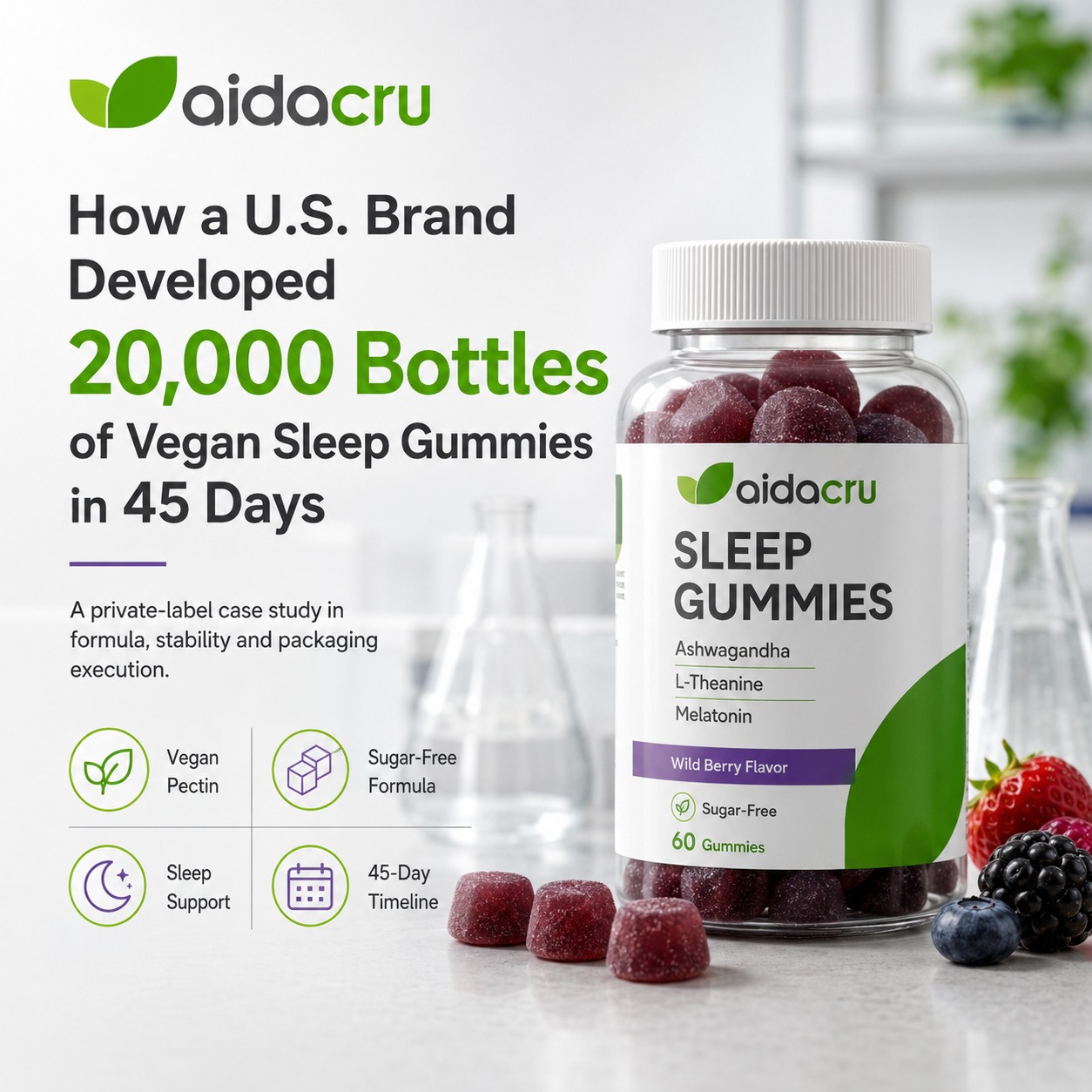
Customer type: Mid-sized U.S. cross-border e-commerce supplement brand
Product: Vegan pectin gummies positioned for a nightly sleep-support and stress-management routine
Initial order: 20,000 bottles, approximately 1.2 million gummies
Project timeline: 45 days from initial formulation work to finished-product delivery milestone
Primary channels: Amazon FBA and the customer's direct-to-consumer store
Project Summary
A U.S.-market e-commerce brand approached Aidacru to develop a vegan pectin gummy for a nightly wellness routine. The buyer wanted a formula direction built around ashwagandha extract, L-theanine and melatonin, but the project involved more than combining ingredients. The product also had to address herbal bitterness, the aftertaste of a sugar-free sweetener system, pectin-gummy texture, warm-weather logistics and packaging for e-commerce fulfillment.
Aidacru coordinated formulation, sample rounds, blind flavor evaluation, stability-oriented development and packaging preparation. The project moved from the first formulation brief to a 20,000-bottle production run within the agreed 45-day schedule. According to the customer's project feedback, the first order was followed by a larger 50,000-bottle order 60 days after delivery.
What Made This Gummy Project Difficult?
The main challenge was not ingredient sourcing alone. The buyer needed a vegan pectin gummy that balanced a recognizable berry profile with a high-impact botanical flavor, maintained an acceptable texture under agreed elevated-temperature test conditions, supported a sugar-free positioning subject to final testing and label review, and fit an Amazon-oriented packaging system. Formulation, flavor, stability and packaging therefore had to be developed together rather than as separate tasks.
1. Customer Background
Market and sales channels
The customer sold dietary supplements to U.S. consumers through cross-border e-commerce. Amazon FBA was the primary fulfillment channel, supported by the brand's own direct-to-consumer store. This channel mix made several procurement details especially important:
Gummy stability during ocean freight and non-temperature-controlled storage
Packaging seal integrity and moisture management
Label readability and version control
Inventory planning for an initial commercial order
A repeatable formula and packaging specification for reorders
Brand stage
This was not a single-sample startup test. The customer already had an operating e-commerce business and planned an initial order of 20,000 bottles. The buyer needed to control the risk of a new SKU while confirming that the manufacturing plan could support a larger second run.
Target consumer and positioning
The product was planned for U.S. adults building a consistent nighttime wellness routine. The target positioning included:
Vegan pectin instead of animal-derived gelatin
A non-gelatin dosage form
A berry flavor profile
A sugar-free direction, subject to final formulation, laboratory data and label review
A convenient gummy format for daily use
The project used sleep-support and general stress-management language. It was not positioned to diagnose, treat, cure or prevent insomnia, anxiety or any other disease.
2. Project Objectives
The buyer's formulation brief included the following direction:
| Project element | Buyer requirement | Procurement and release check |
|---|---|---|
| Ashwagandha extract | KSM-66 ashwagandha extract requested | Confirm authorized source, specification, purchase records and trademark-use conditions |
| L-theanine | Included in the nightly formula direction | Confirm source, amount per serving and label presentation |
| Melatonin | 3 mg target | Confirm whether the amount is per gummy or per labeled serving and complete U.S. label review |
| Flavor system | Natural berry juice extract direction | Confirm sugar contribution and its effect on any sugar-free claim |
| Gummy base | 100% vegan pectin | Review acid balance, solids, moisture and process conditions |
| Sweetener system | Erythritol and steviol glycosides | Balance sweetness, aftertaste, texture and compliant label wording |
Initial order and packaging brief
The agreed first production run was 20,000 bottles, approximately 1.2 million gummies at about 60 gummies per bottle. The packaging direction included:
250 cc light-protective rPET wide-mouth bottle
Child-resistant closure selected for this project
Tamper-evident shrink band
Food-grade desiccant
E-commerce-ready outer cartons
These specifications were project choices, not a statement that every U.S. melatonin supplement requires the same closure or packaging system.
3. The 45-Day Development Plan
| Stage | Planned time | Main work | Buyer approval point |
|---|---|---|---|
| Formulation and first samples | 10 days | Formula feasibility, first samples, initial flavor and stability review | Approve the first sample direction |
| Blind tasting and adjustment | 15 days | Berry profile, sweetness, herbal aftertaste, texture and appearance | Approve the final reference sample in writing |
| Bulk production and packaging | 20 days | Material preparation, production, packaging, inspection and shipment preparation | Lock formula, label and packaging versions |
| Total | 45 days | From confirmed project brief to agreed finished-product delivery milestone | Confirm all milestone dates in the project record |
This schedule was possible because label review, packaging procurement and production preparation ran in parallel with the later sample rounds. A late formula, serving-size or label change would have affected both timing and cost.
4. Four Procurement Challenges
Challenge 1: Pectin-gummy softening and sticking during warm-weather logistics
Summer transportation, port waiting time and some warehouse environments can expose gummies to elevated temperatures. If the pectin system, moisture level or surface treatment is not suitable, gummies may soften, deform or stick together.
The buyer therefore included elevated-temperature performance in the project acceptance criteria. Aidacru developed toward a target above 45°C under the test conditions agreed for the project. This threshold is not a universal shelf-life guarantee; it must be interpreted with the test method, duration, sample count and acceptance criteria.
Challenge 2: Herbal bitterness in a sugar-free formula direction
Ashwagandha extract can contribute earthy, bitter and astringent notes. At the same time, the buyer wanted to reduce conventional sugar and use an erythritol-and-stevia sweetener system. The combined effect of botanical flavor, stevia aftertaste, acidity and pectin texture created a more complex sensory problem than choosing a flavor name.
Challenge 3: E-commerce packaging protection
The packaging needed to support moisture control, tamper evidence and transit protection while still giving the customer a practical private-label format. Bottle capacity, closure type, desiccant, shrink band, label dimensions and case-pack configuration had to be checked together.
Challenge 4: U.S. claim and label boundaries
Terms such as “Vegan,” “Non-Gelatin” and “Sugar-Free” require different types of support. A sugar-free claim cannot be concluded simply because sucrose was not added or because alternative sweeteners were used. Under 21 CFR 101.60, the finished product must meet the applicable sugar-content, ingredient and labeling conditions. The final Supplement Facts panel and marketing language therefore require review using the finished formula and relevant test data.
5. Aidacru's Development Approach
Step 1: Convert the commercial brief into acceptance criteria
At project kickoff, Aidacru organized the buyer's requirements into five groups:
U.S. target customer and sales channels
Core ingredients, amount per serving and daily-use direction
Vegan pectin, berry flavor and sweetener system
Stability expectations for ocean freight and FBA storage
Initial quantity, packaging configuration and launch schedule
This project brief became the shared reference for formulation, samples, packaging and production communication.
Step 2: Develop the formula and dosage form together
The team evaluated the pectin system, acid balance, solids, moisture, botanical flavor, sweetener aftertaste and serving amount as one formulation problem. This avoided a common buyer mistake: locking a high botanical load first and trying to solve flavor and texture only after the formula was finalized.
Step 3: Run structured sample rounds
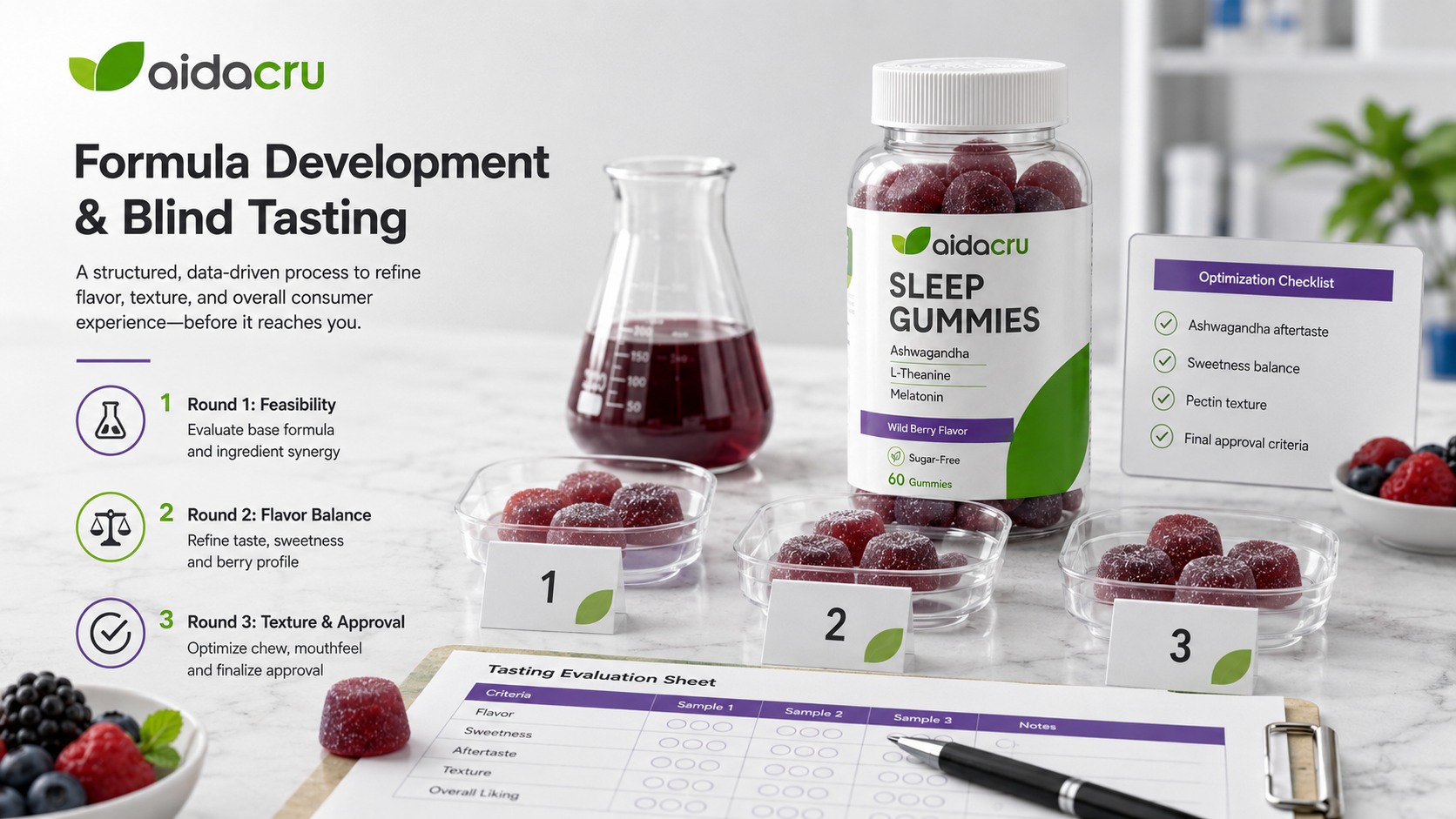
The sample program used coded evaluations rather than informal tasting alone:
Round one checked formula feasibility and the intensity of the herbal notes.
Round two compared berry character, sweet-acid balance and stevia aftertaste.
Round three reviewed firmness, elasticity, surface condition and final color.
Stability-oriented observations recorded softening, deformation, oiling and sticking under agreed conditions.
Step 4: Adjust flavor, texture and surface treatment
Based on buyer feedback, the project adjusted the pectin gel system, moisture control and external coating process. The berry profile, acidity, erythritol and steviol-glycoside balance were also refined to reduce the perception of botanical bitterness and improve the finish.
The project did not rely on claims such as “perfect masking” or “will never stick.” The final reference sample had to meet the written flavor, texture and test criteria agreed by both parties.
Step 5: Confirm stability-oriented performance
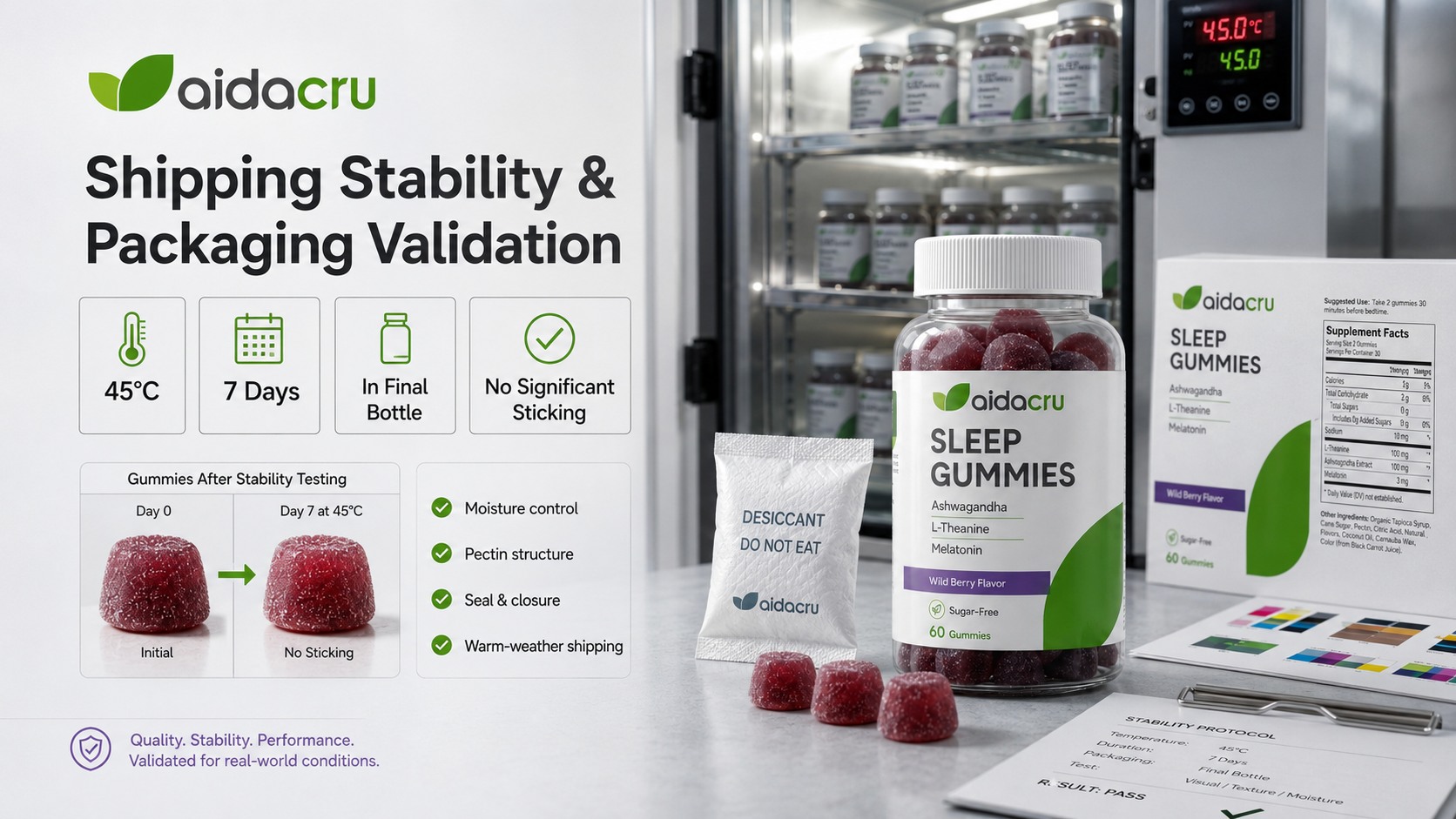
The final sample was evaluated against the project's elevated-temperature criteria. Under the agreed test conditions, the sample met the target above 45°C without unacceptable sticking. For publication and future RFQs, the relevant test method, temperature, duration, sample quantity and acceptance standard should remain connected to this statement.
Step 6: Lock packaging and production versions
Before bulk production, the team locked the approved formula version, reference sample, fill count, bottle, closure, desiccant, shrink band, label file and outer-carton requirements. Packaging inspection covered seal condition, shrink-band integrity, bottle and label appearance, batch information and carton markings.
6. Production and Quality-Control Focus
| Control point | What was checked | Why it mattered to the buyer |
|---|---|---|
| Raw materials | Ingredient identity, specifications, supplier documents and approved formula version | Prevented unapproved ingredient or source changes |
| Gummy process | Mixing, cooking, depositing, setting, drying or conditioning and surface treatment | Reduced texture differences between the approved sample and bulk production |
| Sensory reference | Berry flavor, sweetness, botanical aftertaste, firmness and appearance | Kept the production batch aligned with buyer approval |
| Fill and packaging | Gummy count, bottle, closure, desiccant, shrink band and label version | Supported e-commerce protection and version control |
| Finished-product review | Applicable identity, composition, quality and label-supporting records | Supported release decisions and buyer documentation |
| Shipment preparation | Case packing, carton marks and delivery records | Supported handoff to the West Coast warehouse |
Any ingredient-content statement, sugar-free claim or quality specification must be supported by the applicable finished-product records. Packaging visuals in this case study are illustrative and do not replace actual batch documentation.
7. Project Outcome
The project completed the development and production of a vegan pectin berry gummy containing ashwagandha extract, L-theanine and melatonin as the planned formula direction. The team confirmed the buyer's final flavor, texture, appearance and packaging configuration and completed the initial 20,000-bottle production run.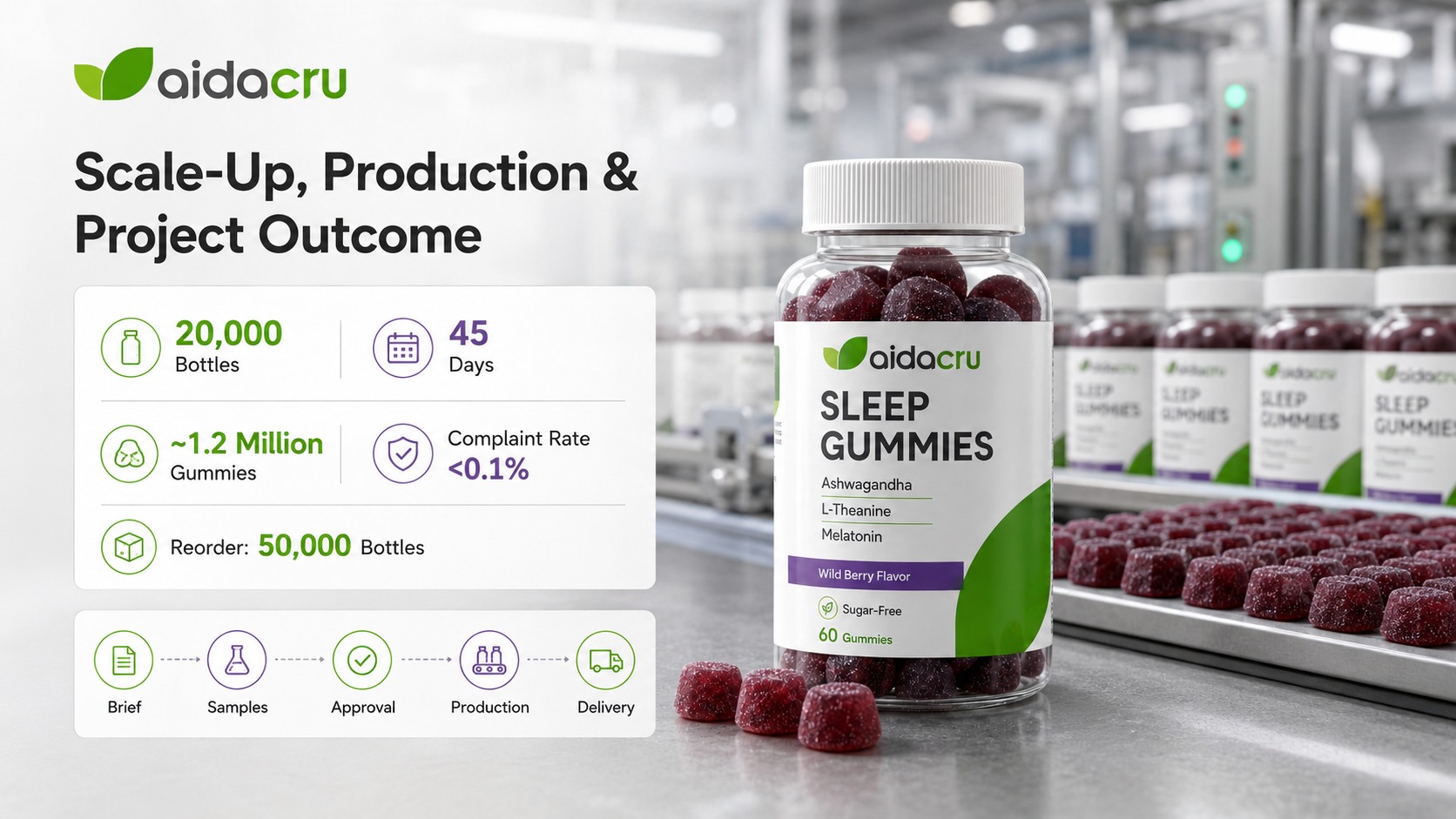
Delivery and market feedback
The finished order was prepared for delivery to the customer's Los Angeles-area warehouse. According to customer-provided records, the product's first-month complaint rate was below 0.1%. The customer later increased the follow-up order to 50,000 bottles, 60 days after receiving the first production run.
These results are specific to this project. They do not prove that vegan or sugar-free positioning alone caused the market response, and they do not guarantee the same result for another brand, formula or sales channel.
8. Buyer Checklist for a Similar Gummy Project
Before requesting a quotation, prepare the following information:
Target country and intended sales channels
Target consumer and compliant product-positioning direction
Ingredient list and target amount per labeled serving
Number of gummies per serving and servings per container
Pectin or gelatin requirement
Flavor, sweetener and color preferences
Expected initial order quantity
Bottle, pouch, closure, desiccant and tamper-evident requirements
Storage and shipping conditions, including warm-weather exposure
Target launch date
Required sample, testing and documentation plan
Claims that require laboratory or regulatory support
9. Four Lessons for Private-Label Buyers
1. Validate shipping risk during sampling
Do not approve a U.S.-bound gummy only at room temperature. Share the expected freight route, storage model, fulfillment channel and sales season so the sample plan can include relevant stability-oriented checks.
2. Develop high-impact botanicals and sweetener systems together
Botanical bitterness, acidity, sweetener aftertaste and pectin texture affect one another. Confirm the core ingredients and amount per serving before final flavor selection.
3. Treat marketing claims as a documentation project
Vegan, non-gelatin and sugar-free language must be supported by formula composition, supplier documents, laboratory data where applicable and final label review.
4. Advance packaging and sample approval in parallel
Bottle capacity, closure, desiccant, tamper evidence and label dimensions affect product protection, logistics and unit cost. Early packaging confirmation reduces late-stage changes.
Frequently Asked Questions
What should a buyer send before asking for an MOQ?
Send the target market, product positioning, ingredients, amount per serving, dosage form, bottle count, packaging direction and launch schedule. MOQ depends on the formula, gummy size, flavor, packaging components and testing requirements; it is not one fixed number for every project.
Can Aidacru develop vegan pectin sleep support gummies?
Aidacru supports private-label and custom gummy projects, including pectin-based formulas, flavor development, sample rounds, packaging coordination and bulk-production planning. Final feasibility depends on ingredient load, serving size, texture target and market requirements.
Why choose pectin instead of gelatin?
Pectin can support vegan and non-gelatin positioning. It also has different formulation and processing requirements, particularly for acidity, solids, moisture and heat exposure. The dosage-form decision should be made with both brand positioning and manufacturing feasibility in mind.
Is 3 mg of melatonin measured per gummy or per serving?
It can be designed either way, but the buyer must define the labeled serving and daily-use directions before finalizing the formula and Supplement Facts panel. The amount should never be left ambiguous in an RFQ or label file.
Does using erythritol and stevia automatically make a gummy sugar-free?
No. The complete formula, including juice extracts and other ingredients, must meet the applicable sugar-content and labeling conditions. In the United States, review the finished product against 21 CFR 101.60 and the final laboratory and label data.
How can gummy brands reduce warm-weather sticking risk?
The manufacturer can evaluate the pectin system, solids, moisture, drying or conditioning, surface treatment and packaging. Buyers should also define realistic shipping and storage conditions and agree on a documented test method and acceptance criteria.
What packaging is suitable for e-commerce gummy products?
Options may include light-protective bottles, appropriate closures, desiccants, induction or tamper-evident systems, shrink bands and shipping cartons. The correct combination depends on the formula, bottle capacity, target market and fulfillment model.
Can every custom gummy project be completed in 45 days?
No. The 45-day schedule was specific to this project and depended on fast buyer feedback, parallel packaging preparation and timely formula and label approval. Complex formulas, custom molds, specialized ingredients, extended testing or late artwork changes may require more time.
Key Takeaways
This U.S.-market project used a vegan pectin gummy format and an initial commercial order of 20,000 bottles.
The main procurement challenge was coordinating botanical flavor, sweetener aftertaste, pectin texture, warm-weather stability and e-commerce packaging.
Structured sample rounds and written buyer approvals helped move the project from formulation to bulk production within the agreed 45-day schedule.
Sugar-free, elevated-temperature and market-performance statements require specific test or business records and should not be used as universal promises.
Buyers receive more useful MOQ, sample and lead-time guidance when they provide the target market, formula, serving size, packaging and launch plan in the first RFQ.
Start a Similar Private-Label Gummy Project
If you are developing a vegan sleep-support gummy, botanical gummy or another private-label supplement for the U.S. market, send Aidacru the following:
Product category and target consumer
Target ingredients and amount per serving
Pectin or gelatin requirement
Target market and sales channels
Estimated first-order quantity
Bottle, pouch and closure direction
Sample and testing requirements
Expected launch date
Aidacru can use this information to review formulation feasibility, sample planning, practical MOQ options, packaging direction and production timing.
Website: www.aidacruhealth.com
Private-label manufacturing: Aidacru Private Label Supplement Manufacturing
Sleep supplement category: Aidacru Sleep Supplements
Product solutions: Aidacru Supplement Product Solutions
Regulatory References
21 CFR 101.60: Nutrient content claims for sugar and calorie content
FDA guidance on dietary supplement structure/function claims
This article provides general B2B manufacturing information and is not legal advice. Final formulation, Supplement Facts, warnings, claims and packaging should be reviewed by qualified regulatory or labeling professionals for the intended market.