

Protein Gummies Private Label: What B2B Buyers Should Verify Before Launch
Date: 2026-10-17 Categories: Supplement Blog Hits: 259
Quick Answer
Protein gummies are a portable sports-nutrition format, but the phrase “protein gummy” does not tell a buyer how much protein is delivered, which protein source is used, or whether the declared amount is supported by the approved product file. Aidacru currently has a 20-gummy pouch format available for B2B discussion; buyers should verify the formula, serving basis, nutrition panel, finished-product testing, stock allocation, and final label before launch.
Key Takeaways
- Protein grams must be evaluated per serving and against the approved formula and label, not inferred from a front-panel image.
- Protein source affects amino-acid profile, allergen labeling, flavor, texture, and commercial positioning.
- A 20-count pouch can support trial, on-the-go, or retail formats, but serving count and net quantity still require confirmation.
- The best first inquiry includes the target market, protein target, serving concept, package, quantity, documents, and launch date.
What Are Protein Gummies?
Protein gummies are gummies formulated with a protein-containing ingredient and marketed with a declared amount of protein per serving. They combine a confectionery-style delivery format with sports-nutrition positioning, but formulation constraints are different from those of a powder, beverage, bar, or capsule.
For procurement purposes, the category should be defined by measurable attributes: protein source, grams per serving, serving size, gummy count, texture specification, nutrition panel, allergen statement, packaging, test methods, and shelf-life support. The name alone is not a finished product specification.
What Is the Current In-Stock Format?
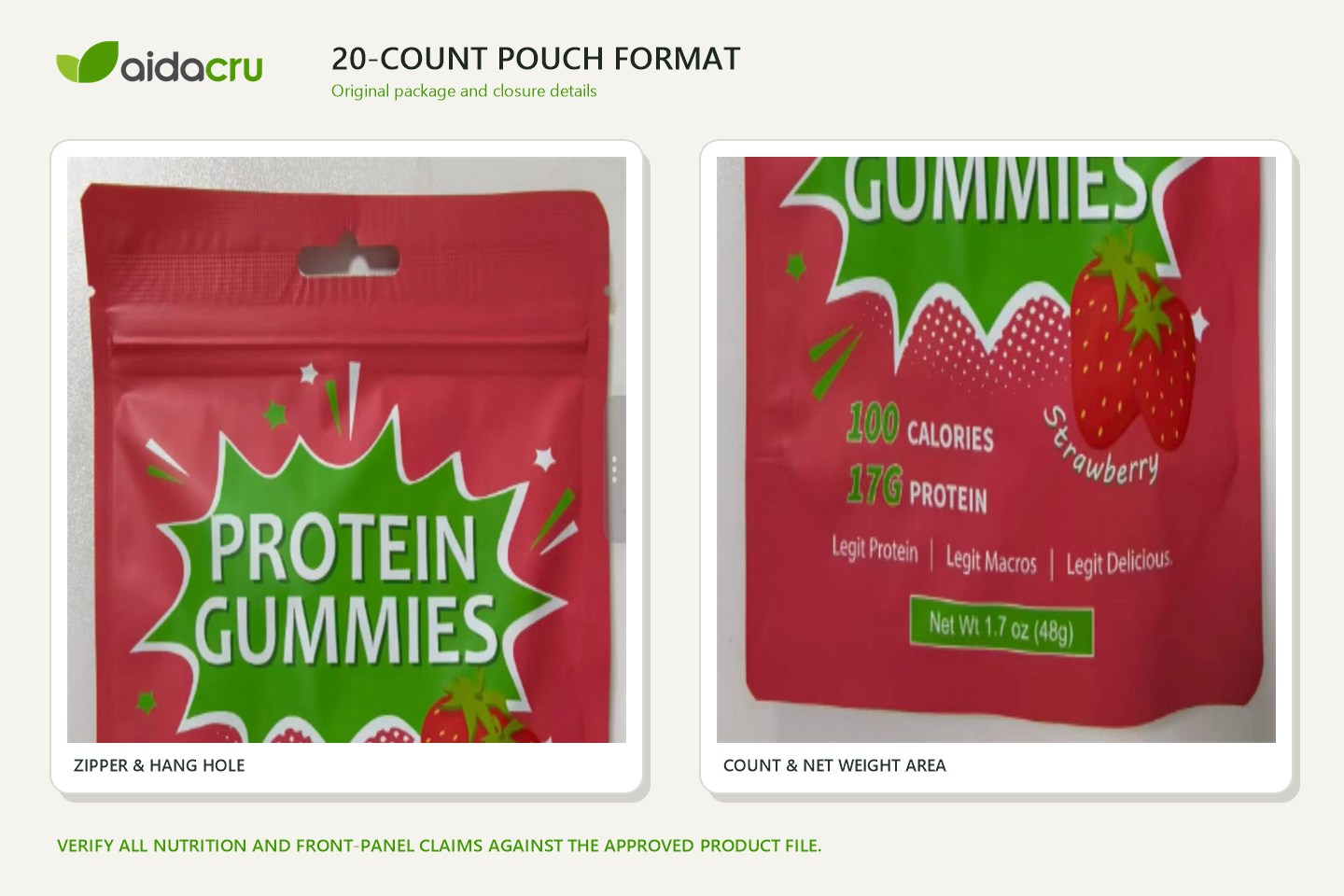
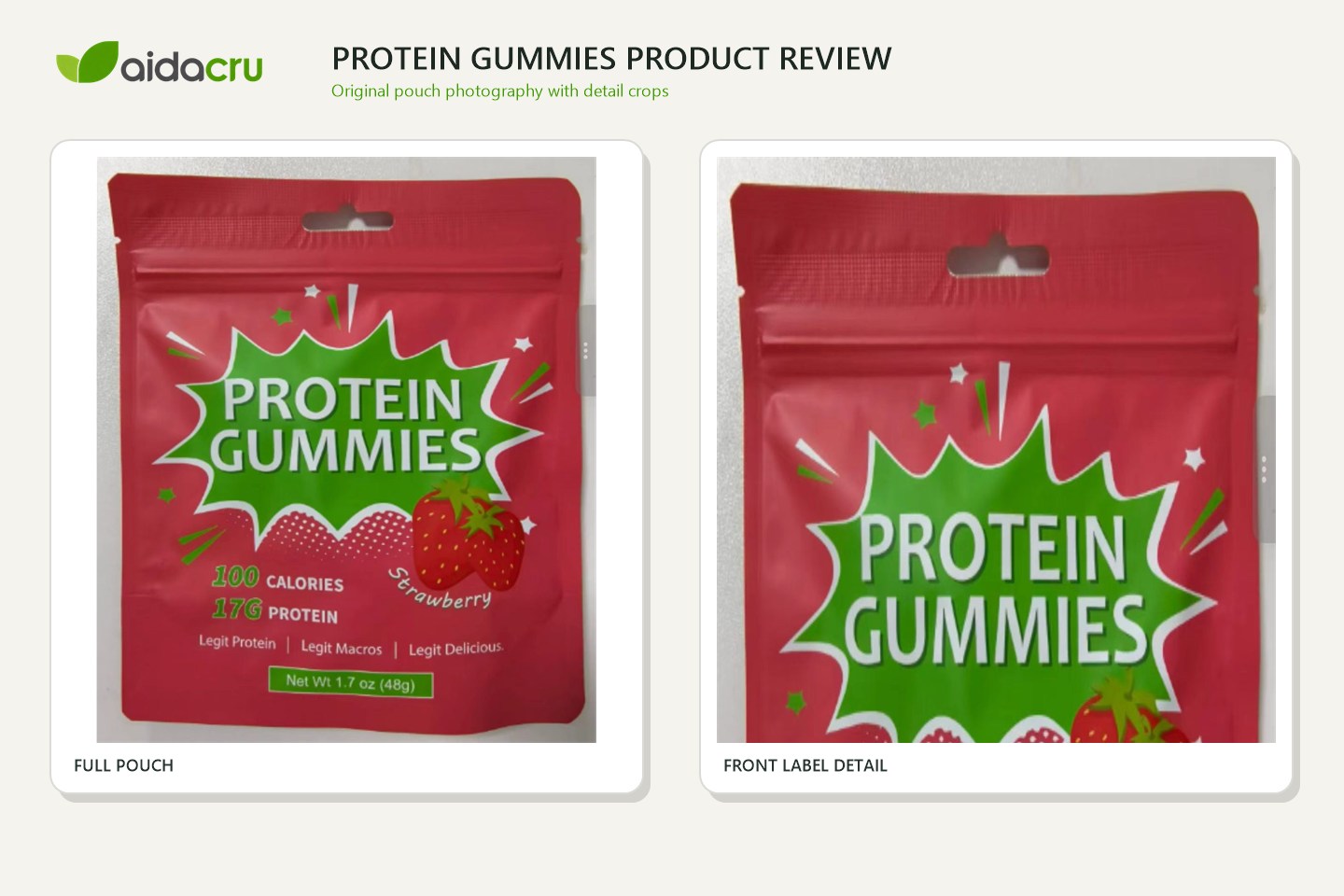
The supplied product photo and brief identify:
- protein gummies in a resealable pouch;
- 20 gummies per bag;
- a strawberry product presentation;
- current stock availability; and
- a B2B opportunity for wholesale or a related private-label discussion.
The package image includes front-panel nutrition statements, but this article does not treat those statements as verified commercial claims. Before publication or resale, request the approved Supplement Facts or applicable nutrition panel, formula specification, relevant test method, and lot-specific documentation.
Why Protein Gummies Require More Than a Trend Check
A product can look highly differentiated on social media yet fail a buyer review if the serving basis is unclear. The first question is not “Does the pouch look good?” but “What is the verified protein amount per serving, and what must a consumer eat to receive it?”
The second question is whether the desired protein load can coexist with acceptable flavor, texture, stability, piece size, and package count. High solids and protein-containing ingredients can change chew, stickiness, flavor masking, moisture behavior, and process feasibility.
Protein Gummies vs Other Sports-Nutrition Formats
| Format | Buyer advantage | Main procurement question | Useful launch role |
|---|---|---|---|
| Protein gummies | Portable, differentiated, visually demonstrable | What source and verified grams are delivered per serving? | Trial SKU, on-the-go concept, line extension |
| Protein powder | Flexible serving size and familiar sports-nutrition use | How do flavor, solubility, scoop weight, and package size perform? | Core protein line or higher-protein serving |
| Protein stick pack | Single-serve portion and travel convenience | Is fill weight, seal integrity, solubility, and carton count controlled? | Sampling, gym, travel, subscription |
| Protein bar | Familiar snack format | How do texture, water activity, allergens, and shelf life perform? | Snack channel and meal-adjacent positioning |
| Capsules/tablets | Precise unit count for suitable actives | Is the intended dose physically practical in the dosage form? | Ingredients suitable for smaller unit doses |
This comparison does not make one format universally better. It helps the buyer define what job the protein gummy needs to perform in the product line.
Seven Questions to Resolve Before Label Design
1. What Is the Protein Source?
Confirm the exact source and material specification. Whey, collagen, gelatin-derived protein, plant proteins, and blends have different composition, allergen, claim, flavor, and marketing implications.
2. How Many Grams Are Delivered Per Serving?
Do not confuse grams of a protein ingredient with grams of protein. The declared nutrition value should be derived and verified using the applicable method and approved label basis.
3. How Many Gummies Make One Serving?
A pouch count is not automatically a serving count. Confirm piece weight, serving size, servings per container, net quantity, and how those values reconcile across specification, test report, and artwork.
4. What Does the Protein Load Do to Texture?
Set measurable acceptance criteria for chew, firmness, stickiness, surface condition, flavor, aroma, and appearance. Evaluate representative samples after appropriate storage, not only immediately after production.
5. What Allergens Must Be Declared?
If the formula uses a milk-derived protein such as whey, milk must be handled and declared as required for the destination market. Cross-contact statements and facility information should be based on the manufacturer's actual allergen-control program.
6. Which Claims Are Supported?
Protein content, calorie statements, sugar statements, source claims, free-from claims, and performance language each require evidence and market-specific review. Avoid muscle-growth, weight-loss, recovery, or disease-related promises unless the exact claim is lawful and adequately substantiated.
7. Is the Pouch a Finished Retail System?
Confirm barrier properties, closure, seal integrity, lot and date coding, count accuracy, case pack, pallet configuration, and any secondary carton. A visually attractive pouch still needs to function throughout shipping and the supported shelf-life period.
From Product Concept to an Approved 20-Count SKU
Step 1: Define the Commercial Role
Decide whether the SKU is a trial pack, daily-format product, sports-nutrition line extension, subscription item, or distributor-ready stock item. This determines the relevant serving concept, pack count, price architecture, and claims hierarchy.
Step 2: Request the Technical File
Ask for the current formula or product specification, protein source, serving basis, ingredient and allergen statement, nutrition panel basis, physical specifications, packaging configuration, stock quantity, and available lot documents.
Step 3: Evaluate the Sample Against Written Criteria
Review count, weight, flavor, aroma, texture, stickiness, color, pouch seal, zipper function, print legibility, and overall presentation. Document what would cause rejection or rework.
Step 4: Reconcile Every Label Number
Match the front-panel protein and calorie statements to the approved nutrition panel and specification. Confirm serving size, servings per container, net weight, ingredients, allergens, responsible-party details, warnings, and required disclaimers.
Step 5: Choose the Commercial Route
Existing inventory may support a faster test, while private label may change artwork and packaging, and a custom OEM formula may change the protein target, flavor, shape, count, or package. Each route has a different feasibility, documentation, cost, and timeline profile.
Step 6: Confirm Release and Shipping Requirements
Before a purchase order, define the agreed tests, documents, lot-release process, packaging scope, case pack, freight terms, destination, and required delivery window. Reconfirm inventory after the technical and artwork review.
B2B Procurement Checklist
- [ ] Target country, channel, and consumer positioning defined
- [ ] Current 20-count pouch inventory confirmed in writing
- [ ] Protein source and material specification reviewed
- [ ] Protein grams per serving and serving size verified
- [ ] Nutrition panel and front-panel statements reconciled
- [ ] Ingredient list and allergen declaration reviewed
- [ ] Gummy texture and sensory acceptance criteria documented
- [ ] Finished-product testing and lot documents agreed
- [ ] Pouch material, zipper, seal, coding, case pack, and net quantity confirmed
- [ ] Claims reviewed for the destination market
- [ ] Stock, private-label, or custom-OEM route selected
- [ ] Quantity, price scope, shipping terms, and timeline aligned
Frequently Asked Questions
1. Are protein gummies the same as ordinary gummies with added protein?
The commercial term can cover different formulas. Buyers should evaluate the actual protein source, declared grams per serving, serving size, testing basis, and nutrition label rather than relying on the category name.
2. Does this pouch contain 20 servings?
It contains 20 gummies. The number of servings depends on the approved serving size, which must be confirmed in the current product specification and nutrition panel.
3. Can I advertise the protein grams shown on the sample image?
Not from the image alone. Use a nutrition statement only after the final formula, serving basis, approved label, testing or calculation method, and destination-market requirements have been reviewed.
4. Can protein gummies replace a protein powder?
They serve a different product and usage concept. Compare verified protein per serving, unit size, consumer use, sensory experience, price per serving, and package format before deciding their role in the portfolio.
5. Can the flavor, color, or pouch be customized?
Potential changes require a defined private-label or custom-OEM scope. Formula changes may require feasibility work and samples; packaging changes may require artwork, material, print, and quantity review.
6. What documents should a B2B buyer request?
Request the current specification, ingredient and allergen information, approved nutrition panel basis, finished-product test plan, lot-specific release documents available for the goods, packaging specification, and stock confirmation. Add market-specific documents required by your compliance team.
7. How should a buyer compare quotations?
Compare the same scope: formula, piece and serving basis, pouch count, packaging components, testing, documentation, case pack, freight terms, and any artwork or setup charges. A unit price is not comparable if inclusions differ.
8. Is the current stock guaranteed until I finish label review?
No. Stock is time-sensitive and should be reconfirmed at agreed checkpoints. Ask whether an allocation can be held and what commercial conditions apply.
About Aidacru
Aidacru supports dietary supplement brands, distributors, e-commerce sellers, and sourcing teams with manufacturer-direct product discussions across gummies, powders, stick packs, capsules, softgels, and other common formats. Projects may begin with a current product platform or move into private-label, OEM, or ODM development according to feasibility.
Exact formula, claims, tests, documents, MOQ, lead time, customization, stock, and price are project-specific. This article does not make a consumer health claim or guarantee destination-market approval.
Request the Protein Gummies Buyer File
Send Aidacru your target country, sales channel, expected quantity, desired protein position, preferred serving and 20-count pouch format, packaging needs, delivery location, launch date, and required documents.
CTA: Request the current specification, verified label basis, sample, dated stock confirmation, packaging options, and B2B quote for Protein Gummies.
Related Buyer Resources
- Product solutions
- Low-MOQ manufacturing guide
- Quality-control buyer guide
- Manufacturing lead-time guide
- Contact/RFQ
Technical References
- FDA, Dietary Supplement Labeling Guide — Chapter IV, Nutrition Labeling
- FDA, What is a Major Food Allergen?
- FDA, Label Claims for Conventional Foods and Dietary Supplements
- Google Search Central, Creating helpful, reliable, people-first content
Final Key Takeaways
Protein gummies can be a distinctive sports-nutrition product, but the purchase decision should rest on verified protein content, an approved serving basis, acceptable sensory performance, correct allergen and nutrition labeling, a functional pouch, and lot-specific supply information. The 20-count in-stock format is a starting point for a B2B review—not a substitute for technical, regulatory, and commercial approval.