

In-Stock Alpha Gummies: A 60-Count Multi-Ingredient Gummy SKU for B2B Buyers
Date: 2026-10-17 Categories: Supplement Blog Hits: 261
Quick Answer
In-stock Alpha Gummies can give supplement brands and distributors a shorter route to sampling than a fully custom gummy project, but “in stock” does not remove the need for formula, label, packaging, and market-compliance review. The current Aidacru product format contains 60 individually wrapped gummies in a tube; final allocation, commercial terms, documents, and label claims should be confirmed in writing before purchase.
Key Takeaways
- The commercial opportunity is a ready product format, not an automatic approval of every statement shown on a sample package.
- Individual wrapping may support handling, presentation, and portion organization, but it also affects packaging cost, carton configuration, and waste.
- Buyers should approve the specification, ingredient quantities, label copy, allergen status, testing documents, and destination-market requirements before resale.
- A useful RFQ states the target country, quantity, label language, packaging level, launch date, and documents required.
What Are Alpha Gummies?
“Alpha Gummies” is a commercial product name commonly used for a multi-ingredient gummy positioned around ingredients such as shilajit, ashwagandha, maca, tongkat ali, and related botanicals. It is not a standardized regulatory category, so two products with the same name may have very different formulas, serving sizes, ingredient forms, and label claims.
For B2B buyers, the name is only the starting point. The real product is defined by the signed specification, Supplement Facts or destination-market nutrition panel, ingredient documentation, testing plan, finished packaging, and approved label artwork.
What Is the Current In-Stock Format?
The product supplied for this article is presented as:
- 60 gummies per tube;
- individually wrapped gummy pieces;
- a multi-ingredient “Alpha” positioning;
- current stock availability for B2B discussion; and
- an option to discuss wholesale, packaging adaptation, or private-label development.
Stock quantity can change. Buyers should request a dated stock confirmation that identifies the quantity available, lot information, best-before or expiration data, packaging status, and the period for which the allocation can be held.
In Stock, Private Label, OEM, and ODM: What Is the Difference?
| Route | What the buyer receives | What may be changed | Typical reason to choose it |
|---|---|---|---|
| In-stock wholesale | Existing finished or pack-ready product | Usually limited; confirm case by case | Fast sampling, market validation, or distributor replenishment |
| Private label | An existing product platform under the buyer's approved brand artwork | Label and some packaging elements | Faster brand launch with less formulation work |
| OEM customization | A product made to an agreed buyer specification | Formula, serving, flavor, shape, package, and testing plan within feasibility | Differentiation and tighter control of the product specification |
| ODM development | Manufacturer-supported concept development from product direction to execution | Broader concept, formula, format, and package development | Buyers with a market idea but no finished technical brief |
These terms are used differently across suppliers. Put the intended scope in the quotation and quality agreement rather than relying on the label “OEM” or “ODM.”
Why Individual Wrapping Matters in a Gummy RFQ
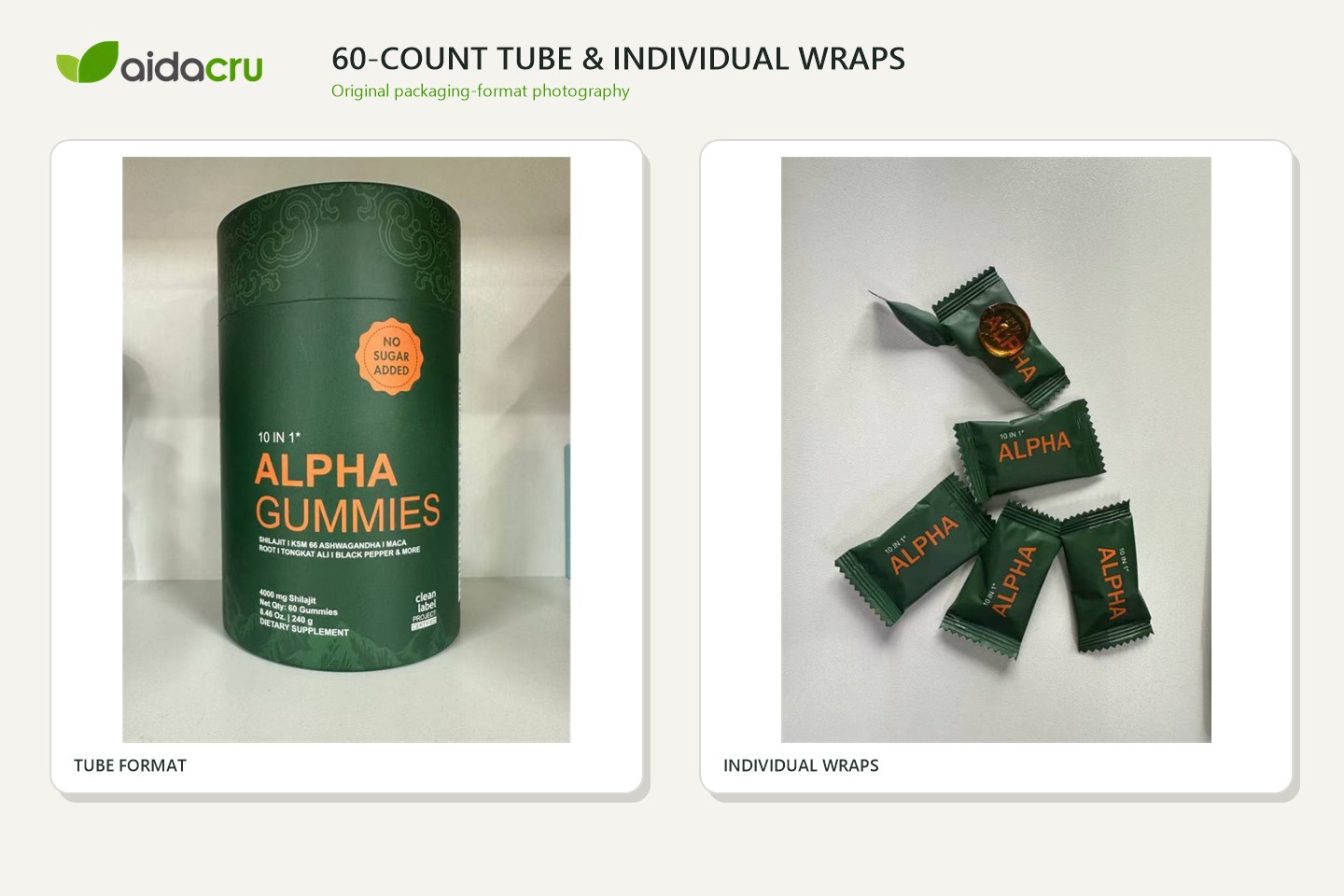
Individual wrapping changes more than appearance. It creates another food-contact packaging component and another production step, so the buyer should define the film structure, seal performance, print requirements, coding position, count accuracy, and secondary container.
It can also change the commercial calculation. Ask whether the quotation is based on loose gummies, individually wrapped gummies, or a completed 60-count tube, and whether cartons, labels, inserts, and freight preparation are included.
Five Checks Before You Approve a Multi-Ingredient Gummy
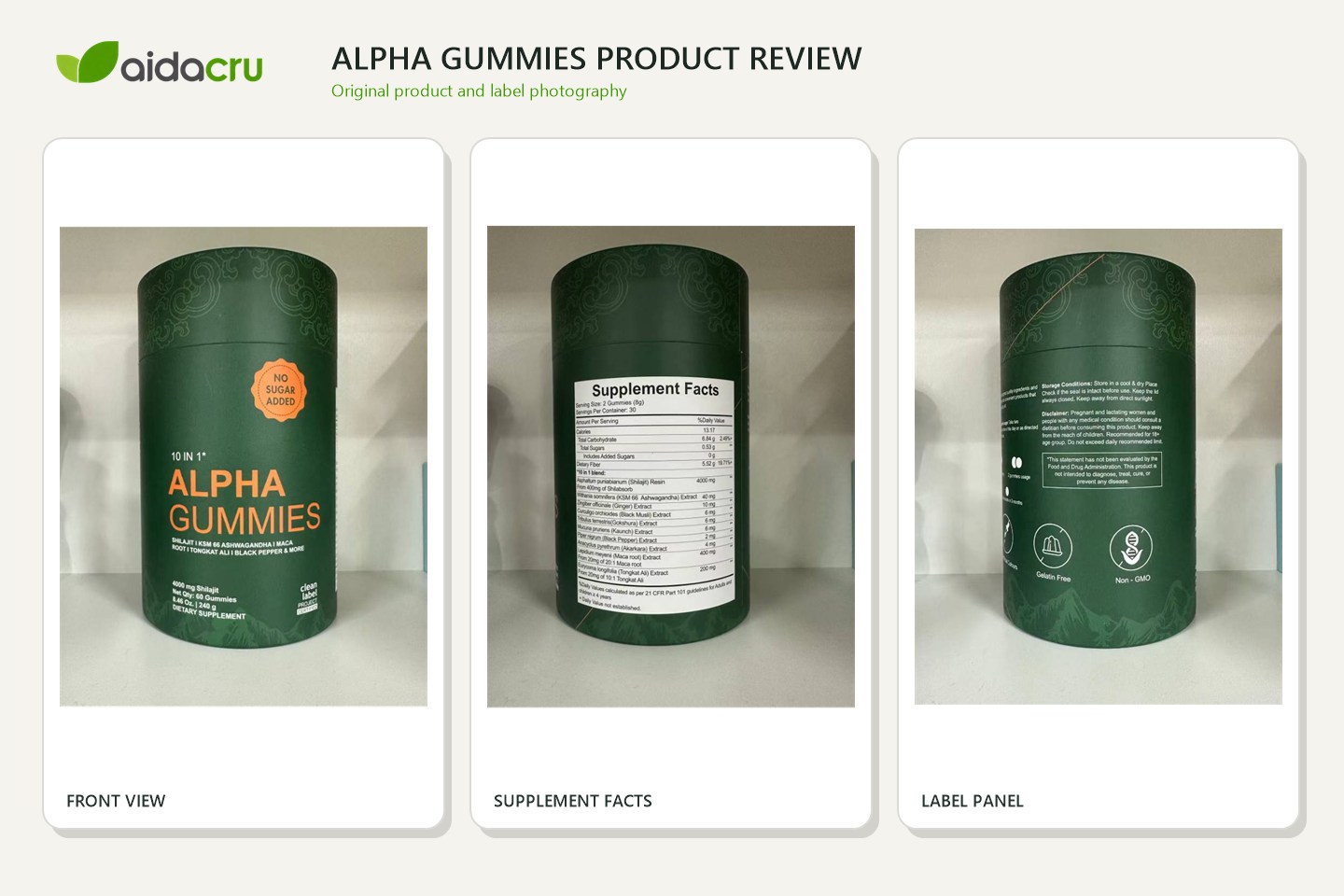
1. Confirm Every Ingredient by Form and Quantity
A front-panel ingredient list does not establish the amount delivered per gummy or serving. Request the complete formula or approved specification showing the ingredient name, material form, input amount, declared amount, serving size, and any overage policy where relevant.
Botanical names and branded raw-material names require extra care. Do not publish a trademark, extract ratio, source, or standardized-active claim until the supplier has provided the supporting document and the brand owner has approved its use.
2. Separate Formula Facts From Marketing Claims
“Multi-ingredient” is a formula description; performance, hormone, sexual-health, stress, energy, or disease-related statements are claims. The buyer is responsible for ensuring that public copy is truthful, supported, and permitted in the destination market.
For the US market, structure/function claims require appropriate substantiation and labeling treatment. Avoid turning ingredient popularity into an implied promise of a consumer outcome.
3. Review the Gummy Base and Allergen Statement
Confirm the gelling system, sweetener system, flavors, colors, processing aids, and allergen-control information. Terms such as “gelatin free,” “non-GMO,” “no added sugar,” or “no artificial colors” should appear in marketing only after the relevant formulation and supplier evidence has been reviewed.
4. Approve the Finished-Product Test Plan
The buyer should know which tests apply to the finished product, not only the raw materials. Depending on the formula and market, the plan may address identity, potency or marker compounds, microbiological limits, heavy metals, physical attributes, and other agreed specifications.
Ask for a lot-specific finished-product document set for the inventory offered. A generic example should not be treated as evidence for a specific commercial lot.
5. Verify Packaging and Label Readiness
Confirm the piece count, serving count, net quantity statement, lot coding, date coding, tamper evidence, storage statement, responsible-party details, and required warnings. Review the complete label as one controlled artwork file before printing or resale.
From Stock Inquiry to Purchase Order: A Practical Process
Step 1: Send a Complete Product Brief
State the target market, sales channel, estimated order quantity, desired 60-count format, branding needs, delivery country, required delivery window, and documents you need to review.
Step 2: Receive the Current Specification and Stock Position
Request a dated product specification, ingredient and allergen information, packaging configuration, available quantity, lot status, and the proposed commercial route. Clarify whether the goods are finished, unlabeled, pack-ready, or subject to a new production run.
Step 3: Evaluate a Representative Sample
Assess appearance, aroma, taste, texture, individual seals, count, package fit, and label legibility. Record approval criteria rather than approving only from a photograph.
Step 4: Complete Claims and Artwork Review
Match every number and statement on the artwork to the approved specification and supporting documents. Remove unsupported certification marks, ingredient trademarks, outcome claims, and market-specific statements.
Step 5: Confirm Quote, Quality Terms, and Release Requirements
The quotation should define what is included. The quality or supply agreement should define specifications, change control, nonconformance handling, document delivery, retain samples, and release responsibilities as appropriate to the project.
Step 6: Approve the Purchase Order and Pre-Shipment File
Before shipment, reconcile the approved SKU, quantity, lot details, carton count, labels, product documents, destination address, and shipping terms. Availability should be reconfirmed because inventory can change during review.
B2B Procurement Checklist
- [ ] Target country and sales channel identified
- [ ] Current stock quantity and allocation period confirmed in writing
- [ ] 60-count tube and individual-wrap configuration confirmed
- [ ] Complete formula and serving size reviewed
- [ ] Ingredient forms, sources, and branded-ingredient permissions checked
- [ ] Gelling, sweetener, flavor, color, and allergen information reviewed
- [ ] Finished-product specification and lot-specific documents requested
- [ ] All public claims supported and approved for the destination market
- [ ] Label copy, warnings, lot code, and date code approved
- [ ] Primary, secondary, and shipping packaging defined
- [ ] Sample acceptance criteria documented
- [ ] Price scope, payment terms, freight terms, and launch timeline aligned
Frequently Asked Questions
1. Are the Alpha Gummies ready to ship immediately?
They are presented as an in-stock product, but shipment timing depends on current allocation, packaging status, document review, label requirements, payment, and destination. Ask for a dated written confirmation before planning a launch.
2. Does the tube contain 60 servings?
Not necessarily. It contains 60 gummies; the number of servings depends on the approved serving size. The serving statement should match the final Supplement Facts or applicable destination-market panel.
3. Can the existing formula be sold under my brand?
Private-label feasibility depends on the commercial arrangement, target market, order quantity, label review, and packaging availability. Request a written scope showing which elements are fixed and which can be branded or changed.
4. Can I change the ingredients in an in-stock SKU?
Changing ingredients normally moves the project from existing inventory to a new OEM or ODM development. That can require feasibility review, sampling, specifications, new testing, new packaging, and a different timeline.
5. Can I use the ingredient and certification claims printed on the sample package?
Only after the underlying formula, supplier documents, trademark permissions, test records, and market requirements have been verified for the lot and label you will sell. A sample image is not sufficient substantiation.
6. Are individually wrapped gummies better than loose gummies?
They are different packaging systems. Individual wraps may help presentation and piece handling, while loose formats may use less material and have a different cost structure; the right choice depends on channel, climate, brand position, and budget.
7. What should I include in my first RFQ?
Include target country, sales channel, expected quantity, brand or neutral-pack requirement, desired pack count, packaging preferences, delivery location, target launch date, and required documents. Also state whether you want the existing formula or a custom development.
8. Can Aidacru guarantee market approval?
No manufacturer should replace the buyer's legal and regulatory review. Aidacru can provide the agreed product and manufacturing documents available for the project, while the brand owner or importer should confirm destination-market and channel requirements.
About Aidacru
Aidacru supports B2B dietary supplement projects across gummies and other common dosage forms through manufacturer-direct wholesale, private-label, OEM, and ODM discussions. This page is intended for supplement brands, distributors, e-commerce sellers, and sourcing teams evaluating a defined product opportunity.
Product capability, documents, customization scope, MOQ, lead time, price, and inventory should be confirmed for the specific RFQ. No health outcome or regulatory approval is implied by this article.
Request the Current Alpha Gummies File
To receive a useful response, send Aidacru:
- target country and sales channel;
- estimated order quantity;
- existing stock or custom-formula preference;
- desired 60-count tube, individual wrap, label, and carton requirements;
- delivery country and launch timeline; and
- documents required by your compliance or quality team.
CTA: Request the current specification, stock confirmation, sample options, packaging scope, document list, and quotation for the 60-count Alpha Gummies SKU.
Related Buyer Resources
- Product solutions
- Low-MOQ manufacturing guide
- Quality-control buyer guide
- Global buyers FAQ
- Contact/RFQ
Technical References
- FDA, Label Claims for Conventional Foods and Dietary Supplements
- FDA, Dietary Supplement Labeling Guide
- Google Search Central, AI features and your website
Final Key Takeaways
An in-stock Alpha Gummies SKU can reduce early product-development work, but the buyer still needs a controlled specification, evidence-backed label, acceptable sample, clear packaging scope, and current inventory confirmation. Treat the 60-count individually wrapped format as a defined procurement project and send a complete RFQ so Aidacru can respond with the relevant product, document, and commercial details.