

Gelatin vs. HPMC Capsules: How Moisture, Fill, and Packaging Affect the Choice
Date: 2026-08-19 Categories: Supplement Blog Hits: 351
A capsule shell is not just a container. It is part of the product system, and it exchanges moisture with the fill, the package headspace, and the storage environment.
Buyer Answer
Gelatin and HPMC shells behave differently around moisture and certain fill materials. Gelatin generally carries more water and can become brittle if it dries too much or soften under high humidity. HPMC usually starts with less water and may be a better starting point for some hygroscopic or vegetarian-positioned products—but it is not moisture-proof, and it does not replace appropriate packaging or stability work.
Shell choice should come after the formula, fill behavior, manufacturing process, package, target market, and storage conditions are understood—not before.
What Is Capsule Shell–Fill Compatibility?
Capsule shell–fill compatibility is the ability of the shell and its contents to remain physically and chemically suitable through manufacturing, packaging, storage, and the proposed shelf life.
The review may include moisture movement, brittleness, softening, deformation, closure, powder adhesion, chemical interaction, disintegration or dissolution behavior, and package protection.
A shell can perform well when empty and behave differently after filling. The formula may draw moisture from the shell, release moisture into it, interact with the polymer, or change the environment inside the package.
Gelatin and HPMC Capsules at a Glance
| Decision Point | Gelatin Capsule | HPMC Capsule |
|---|---|---|
| Polymer source | Animal-derived gelatin | Cellulose-derived hypromellose |
| Market positioning | Familiar, widely used capsule system | Vegetarian or non-gelatin positioning when documentation supports it |
| Typical shell moisture | Generally higher; water acts as a plasticizer | Generally lower; supplier specifications vary |
| Low-humidity concern | Moisture loss can increase brittleness | Often less brittle at lower shell-moisture levels, but product-specific evaluation is still needed |
| High-humidity concern | Softening, deformation, or sticking may occur | Can still absorb environmental moisture and requires package protection |
| Hygroscopic fill | May draw moisture from the shell and increase brittleness | Often considered when lower shell moisture may better fit the fill |
| Chemical interaction | Gelatin can cross-link in the presence of certain reactive compounds | Different polymer chemistry reduces some gelatin-specific interaction risks |
| Buyer documentation | Source, species, allergen/BSE-TSE documentation as applicable | Polymer, gelling system, and vegetarian/vegan-positioning support as applicable |
This is a development comparison, not a universal performance guarantee. Shell supplier, capsule design, fill, process, climate, and packaging all matter.
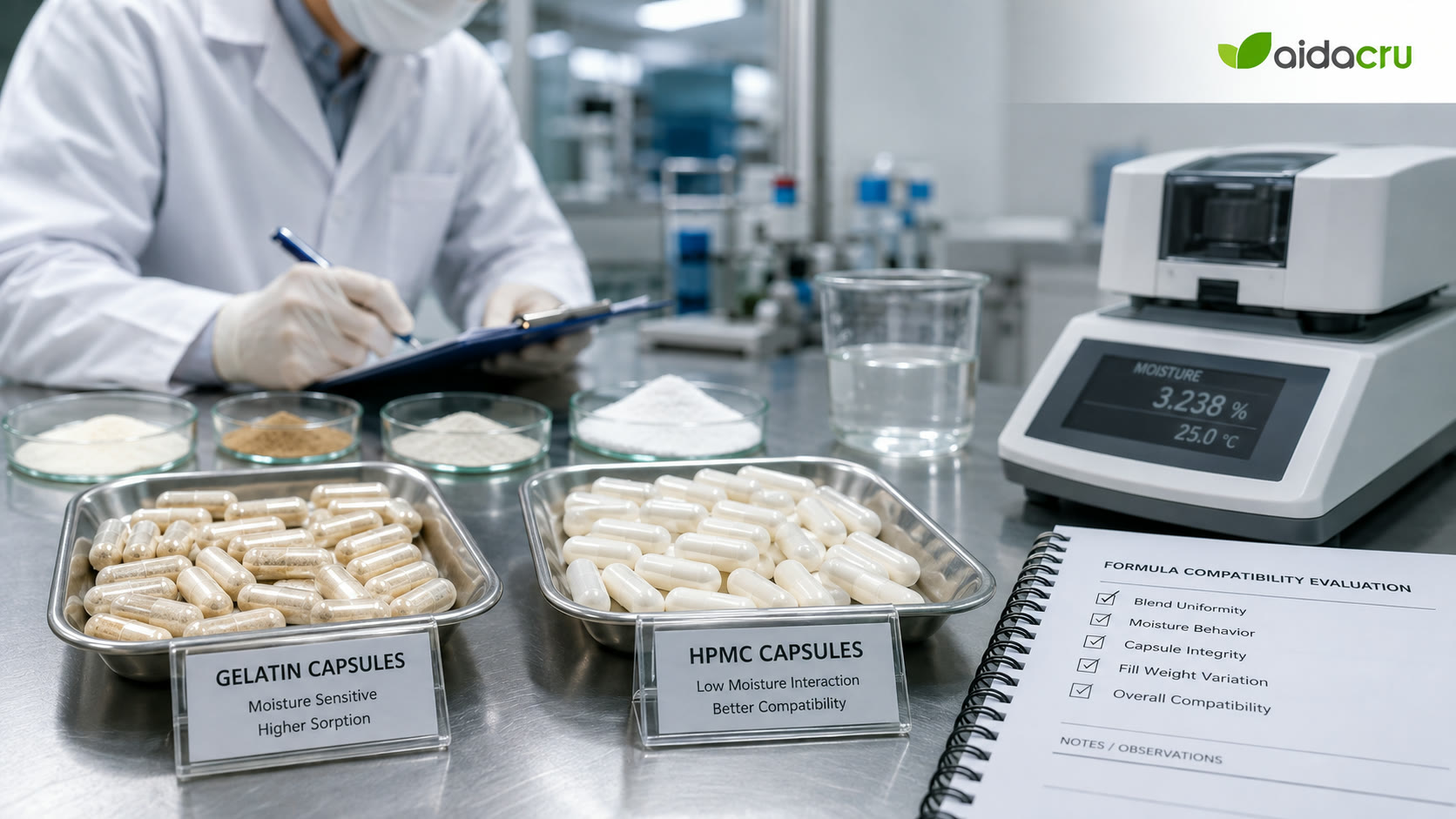
Why Moisture Matters
Gelatin needs enough moisture to remain flexible
Water acts as a plasticizer in gelatin. If the shell loses too much water, it can become less flexible and more brittle. A hygroscopic fill may pull moisture from the shell, especially if the package does not adequately control the product environment.
An empty shell can meet specification and still become brittle after it is filled, packaged, shipped, and stored.
High humidity can affect both shell systems
External humidity can change capsule mass and mechanical behavior. Gelatin may soften and stick under humid conditions. HPMC also exchanges moisture with the environment, although its polymer response differs.
The key point: HPMC does not mean moisture-proof. A moisture-sensitive formula may still need the right barrier bottle or blister, closure, seal, desiccant strategy, and stability plan.
Moisture can move in more than one direction
Water may move from the shell into a hygroscopic fill, from a damp fill into the shell, through the package from the outside environment, between the product and package headspace, or during temporary exposure on the filling and packaging line.
The practical point is simple: evaluate the shell, fill, and package as one system.
Which Fill Materials Need Extra Review?
Hygroscopic powders
Some minerals, botanical extracts, organic acids, fibers, and other powdered ingredients can attract moisture, change flow, clump, or draw water from a gelatin shell.
Buyer action: provide the exact ingredient grade and supplier documents. Do not assume that another formula using the same ingredient name will behave the same way.
High-moisture or insufficiently conditioned powders
A powder with elevated moisture may transfer water into the shell or create a package environment that affects both shell and fill.
Buyer action: define moisture-related specifications that are appropriate to the actual product. The measurement may involve loss on drying, water activity, or another justified test depending on the development question.
Reactive ingredients and degradation products
Certain reactive compounds, including aldehydes or carbonyl-containing degradation products, may promote gelatin cross-linking and affect dissolution behavior.
Buyer action: ask whether the formula or its degradation products create a gelatin-interaction risk, particularly in complex botanical, flavor, or excipient systems.
Oily, sticky, or electrostatic powders
These materials can adhere to capsule surfaces, affect machine flow, interfere with closure, or create visible residue.
Buyer action: approve more than capsule appearance. Fill weight, closure, cleanliness, handling, and performance after storage also matter.
A Practical Capsule Development Workflow
1. Lock the commercial requirements
Confirm the target market, vegetarian or animal-origin preference, claims, serving size, capsule count, bottle count, color, printing, and cost target. “Vegetable capsule” or vegan-related language should be supported by the supplier system and label review rather than treated as a design choice alone.
2. Review the fill formula
Identify hygroscopic, moisture-sensitive, oily, electrostatic, high-density, low-density, or reactive components. Record exact grades and the total capsule load.
3. Compare shell options with the fill
Review shell dimensions, moisture specifications, closure design, fill-machine fit, and chemical compatibility. HPMC is not automatically better, and gelatin is not automatically unsuitable.
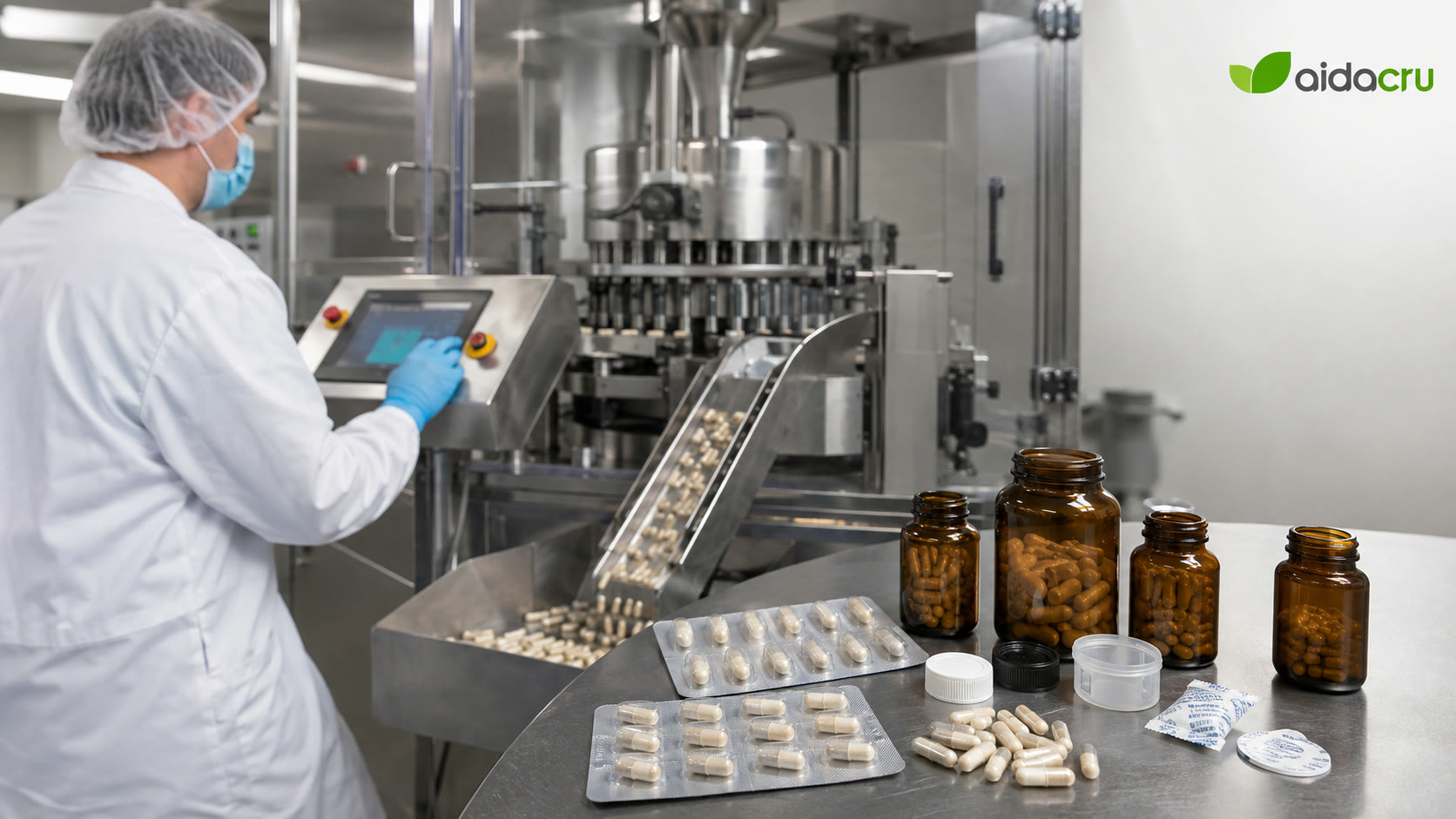
4. Confirm manufacturability
Powder flow, density, fill-weight variation, capsule size, dosing behavior, locking, dedusting, and inspection should be reviewed. A shell selection that works in a hand-filled sample may behave differently on an automated line.
5. Select the package as part of the system
Bottles and blisters provide different moisture and oxygen barriers. Closure liner, induction seal, desiccant, headspace, count, and distribution environment can all affect performance.
Neither gelatin nor HPMC should be expected to protect a highly sensitive fill without suitable barrier packaging.
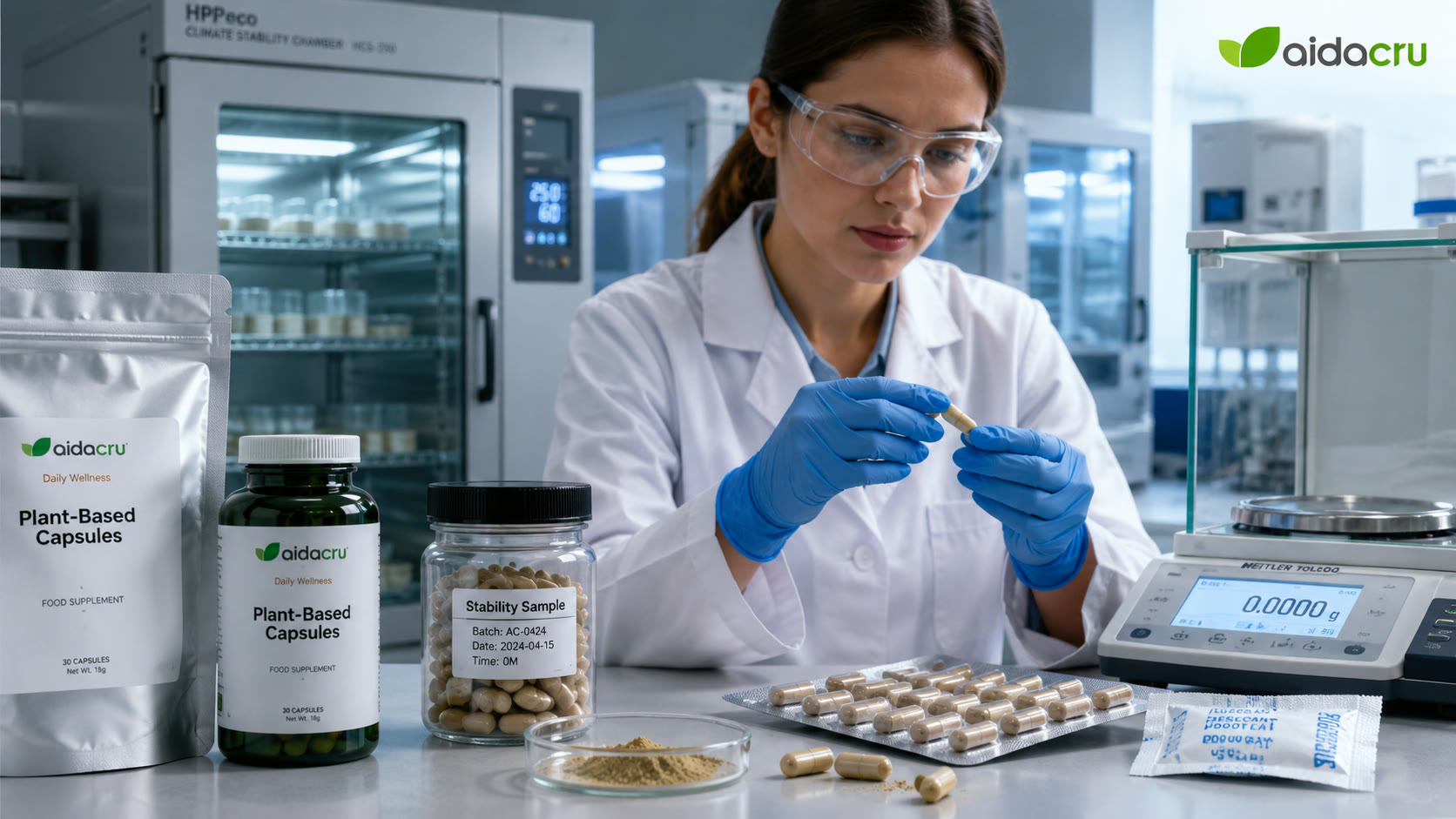
6. Define stability and release criteria
The plan may address appearance, brittleness, deformation, moisture, fill condition, capsule count, fill weight, microbiological or chemical specifications, disintegration or dissolution where appropriate, and package integrity.
The exact tests and acceptance criteria should fit the product and target market rather than come from a generic capsule comparison.
Shell Choice by Buyer Priority
| Buyer Priority | Starting Question | What Else to Verify |
|---|---|---|
| Vegetarian positioning | Can HPMC support the intended market and label? | Supplier composition, gelling system, colorants, processing aids, and claim support |
| Hygroscopic fill | Which shell better fits the proposed moisture balance? | Filled-capsule and packaged-product stability data |
| Humid distribution | How will the product be protected during storage and shipping? | Barrier package, closure, desiccant, and distribution conditions |
| Cost and high-volume filling | Which shell runs reliably on the selected line? | Machine trial, defects, fill-weight control, and supply continuity |
| Sensitive dissolution profile | Could shell chemistry or storage affect rupture or dissolution? | Appropriate performance method and stability time points |
What to Send Before a Capsule Feasibility Review
To make the shell discussion useful, send:
Target market and proposed shell-related claims.
Full ingredient list with grades and amounts.
Hygroscopic, moisture-sensitive, oily, or reactive components identified.
Total fill weight and capsule-size preference.
Gelatin species requirement or HPMC preference.
Color, opacity, printing, and appearance expectations.
Bottle or blister concept, count, liner, seal, and desiccant direction.
Storage and shipping markets, especially hot or humid routes.
Required finished-product tests and stability expectations.
Forecast, launch quantity, and replenishment timing.
FAQ
Are HPMC capsules always better than gelatin capsules?
No. HPMC may support vegetarian positioning and can be useful for some moisture-sensitive fills, but cost, machinability, dissolution behavior, supplier system, package, and formula compatibility still require review.
Do HPMC capsules contain no water?
No. HPMC shells generally contain less water than gelatin shells, but they still contain and exchange moisture. Use the actual supplier specification rather than a universal number.
Why can gelatin capsules become brittle?
Gelatin can lose flexibility when shell moisture falls too low. Dry environments or hygroscopic fills can contribute to moisture loss depending on the package and storage conditions.
Is packaging less important when using HPMC?
No. HPMC is not a moisture barrier. Moisture-sensitive products may still need a suitable bottle or blister, closure, seal, and desiccant strategy.
Is an empty-shell sample enough for approval?
No. An empty-shell sample can confirm color and appearance, but it does not prove fill compatibility, line performance, or packaged stability. The filled and packaged system should be evaluated against defined criteria.
Bottom Line
Gelatin versus HPMC is not simply a marketing or label choice. The right decision depends on the fill, moisture behavior, manufacturing line, package, storage conditions, and the claims the brand intends to support. Empty-shell appearance alone is not enough.
Discuss a Capsule Project
Choosing between gelatin and HPMC for a commercial capsule? Send Aidacru the formula, ingredient grades, target amounts, total fill weight, shell preference, capsule count, packaging concept, destination market, forecast, and launch timeline. The review can surface open shell, fill, manufacturing, packaging, and testing questions before sampling and quotation.
For related capabilities, see private-label supplement manufacturing and Aidacru manufacturing, or contact the team with the capsule brief.
Technical References
Review of capsule material and moisture behavior: https://pmc.ncbi.nlm.nih.gov/articles/PMC8399055/
Review of moisture-sensitive fills and capsule packaging: https://pmc.ncbi.nlm.nih.gov/articles/PMC8623721/
Gelatin moisture exchange and cross-linking in capsule performance: https://pmc.ncbi.nlm.nih.gov/articles/PMC4245433/
U.S. FDA, Dietary Supplement CGMP Small Entity Compliance Guide: https://www.fda.gov/regulatory-information/search-fda-guidance-documents/small-entity-compliance-guide-current-good-manufacturing-practice-manufacturing-packaging-labeling