

Strawberry Creatine Hydration Powder: How to Compare Samples
Date: 2026-11-12 Categories: Supplement Blog Hits: 317
The in-stock strawberry powder pictured here lists 5 g of creatine monohydrate per 13 g serving, or two scoops. To decide whether it suits your sports nutrition line, test one labeled serving in the amount of water your customer would actually carry. Give every evaluator the same mixing instructions so your next sample request reflects the formula and the intended drinking occasion.
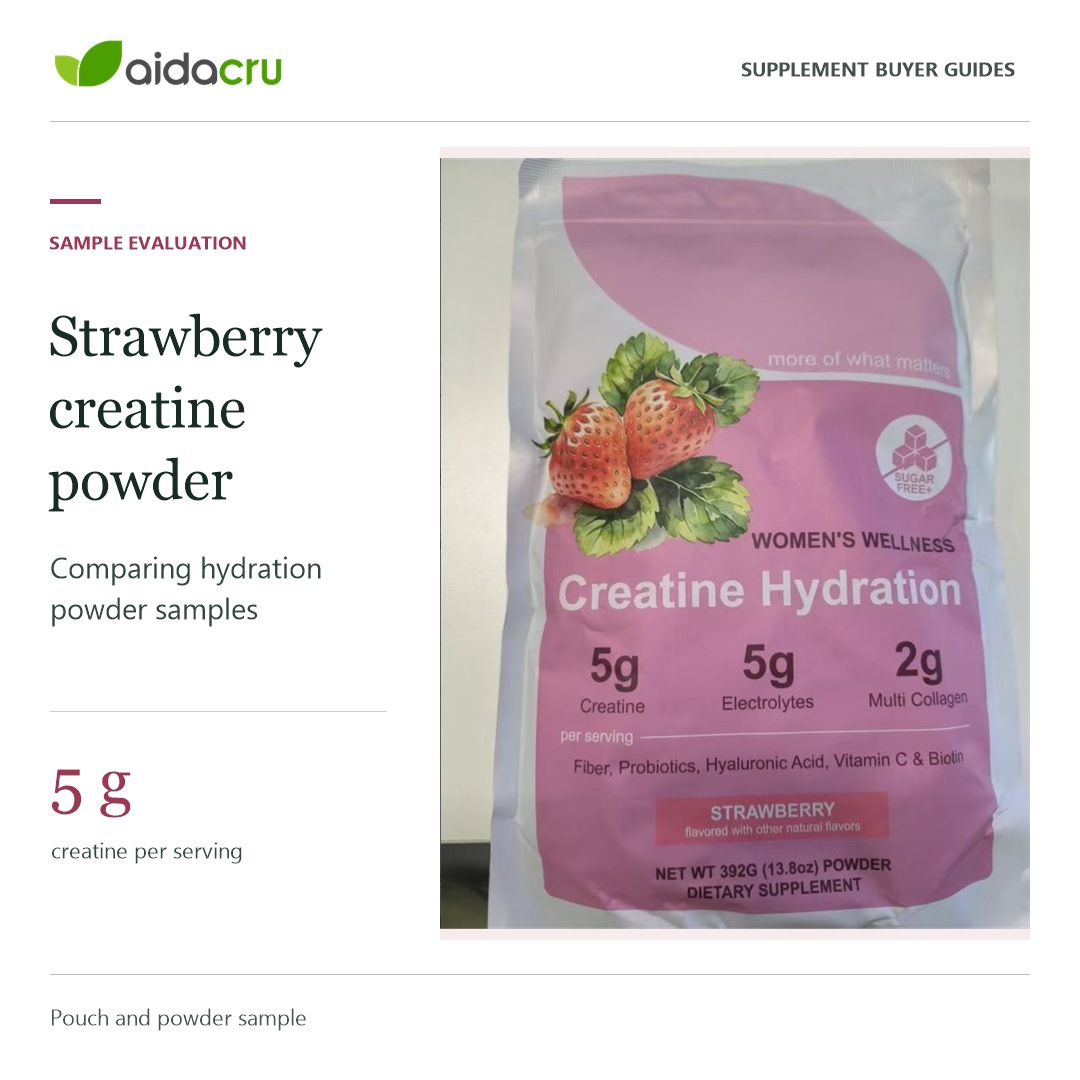
What does the strawberry powder label specify?
The Supplement Facts panel is the starting point for your test sheet. It gives the powder weight for a full serving and lists the creatine amount within it. A scoop of this finished powder also contains other ingredients, including a multi-collagen complex and inulin. Buyers comparing this pouch with a plain creatine powder should account for that difference when evaluating flavor and visible residue.
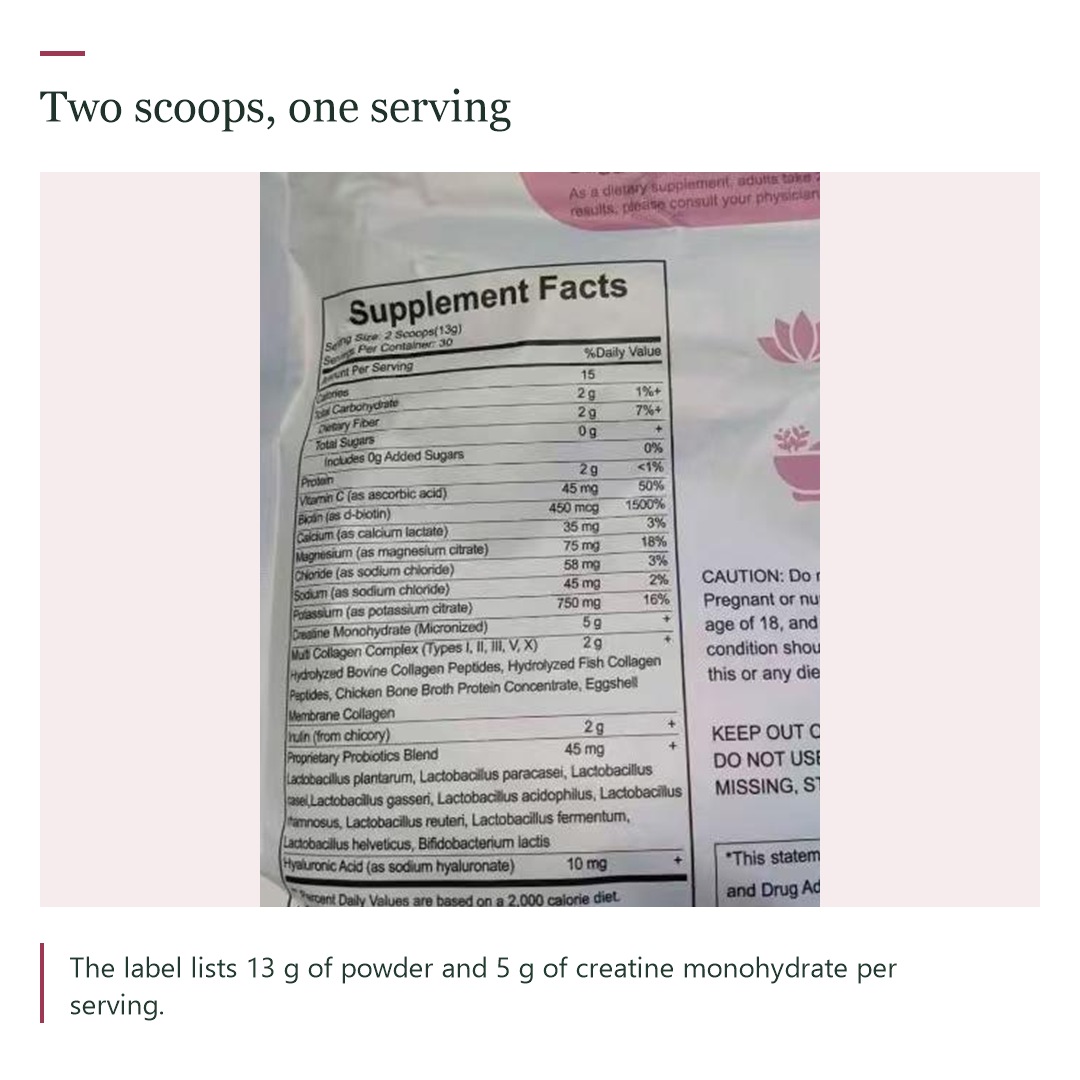
For an electrolyte brief, use the individual mineral rows. For example, the photographed panel lists 45 mg of sodium, 750 mg of potassium and 75 mg of magnesium per serving. If your retailer requires a particular amount of one mineral, identify it by name and confirm it on the written specification for the proposed formula.
How should buyers run a side-by-side mixing test?
Suppose your intended customer mixes one serving after a workout in a reusable bottle. Choose a realistic fill volume, decide whether the water will be chilled or at room temperature and use the same type of bottle for both samples. A comparison between a small glass stirred with a spoon and a large shaker answers a different question.
- Identify the samples. Assign each pouch a code and record the lot or supplier sample reference. Give tasters coded cups if you want to reduce the influence of the packaging.
- Weigh one serving of each product. For the pictured pouch, weigh 13 g. If the alternative has a different serving weight, use its labeled serving and note the difference. This compares the drinks as buyers intend to sell them.
- Repeat the preparation exactly. Measure the water, record its temperature, use the same order of addition and time the shaking or stirring. Keep the remaining powder dry between trials.
- Observe twice. Record clumps and foam immediately after mixing, then check the bottom of each container after the same rest interval. Have each taster record sweetness, strawberry flavor and aftertaste before discussing the samples together.
| Sample evaluation sheet | Sample A | Sample B |
|---|---|---|
| Sample code, labeled serving weight and actual powder weight | ___ | ___ |
| Water volume and temperature | ___ | ___ |
| Container, mixing method and time | ___ | ___ |
| Immediate observations: clumps, foam, strawberry aroma | ___ | ___ |
| Taste: initial sweetness, strawberry intensity, aftertaste | ___ | ___ |
| Rest interval and visible residue | ___ | ___ |
| One change requested for the next sample | ___ | ___ |
Which observations will help the factory revise a sample?
“Too sweet” gives the sample team little direction without the water volume. A useful request reads, for example, “In our standard bottle at the recorded fill line, the strawberry flavor was strong enough. We want to trial a less sweet version at the same serving weight.” This identifies the attribute to change and the conditions to preserve.
If visible residue is the issue, send the sample code, elapsed time and a photo taken before the bottle is disturbed. Keep taste feedback and visual observations in separate fields. Identifying what settled would require further investigation.
Packaging comes next. If the drink works in a multi-serve pouch but your launch calls for individual servings, ask the factory to review the fill weight and proposed film before quoting stick packs. Read Aidacru's hydration powder and stick pack guide.
Buyer FAQ
How much creatine does the photographed sample declare?
It lists 5 g of creatine monohydrate per two-scoop, 13 g serving of finished powder.
How much water should the panel use?
Choose the fill volume that fits the buyer's intended use. If the brief includes two different bottle sizes, run a separate comparison at each volume and label the results accordingly.
Why weigh the powder if a scoop is provided?
Weighing records how much powder was actually used. It also lets a second tester reproduce the drink when their scoop fill or leveling technique differs.
When should we check the bottom of the bottle?
Set a common observation time before starting. Record the immediate result and what is visible after the chosen rest interval for both samples.
What should a request for the next sample include?
Provide the sample code, serving weight, water volume, preparation method, one specific adjustment and the pack format you intend to sell. Include the relevant tasting note or comparison photo.
Key takeaways
- The photographed pouch declares 5 g of creatine monohydrate in a 13 g serving of finished powder.
- A weighed serving, a measured water volume and consistent preparation make the comparison repeatable.
- A revision brief should tell the factory which attribute to change and which test conditions to retain.
Request a strawberry powder sample. Share the water volume, serving size and pouch or stick pack format your target customer will use. For the existing stock pack, ask Aidacru to confirm the available lot, quantity and remaining shelf life for your destination. Send your powder sample brief.