

AI Can Draft a Supplement Formula. It Cannot Approve a Production Specification.
Date: 2026-08-10 Categories: Supplement Blog Hits: 381
Buyer Answer
An AI-generated supplement formula is an early product concept, not a production-ready specification. Before manufacturing, qualified teams must confirm the exact ingredient grades, complete formula load, dosage-form capacity, serving design, specifications, test approach, packaging, label content, and approval responsibilities. The controlled manufacturing documents—not the AI output—must become the source of truth.
What Is an AI Supplement Formula?
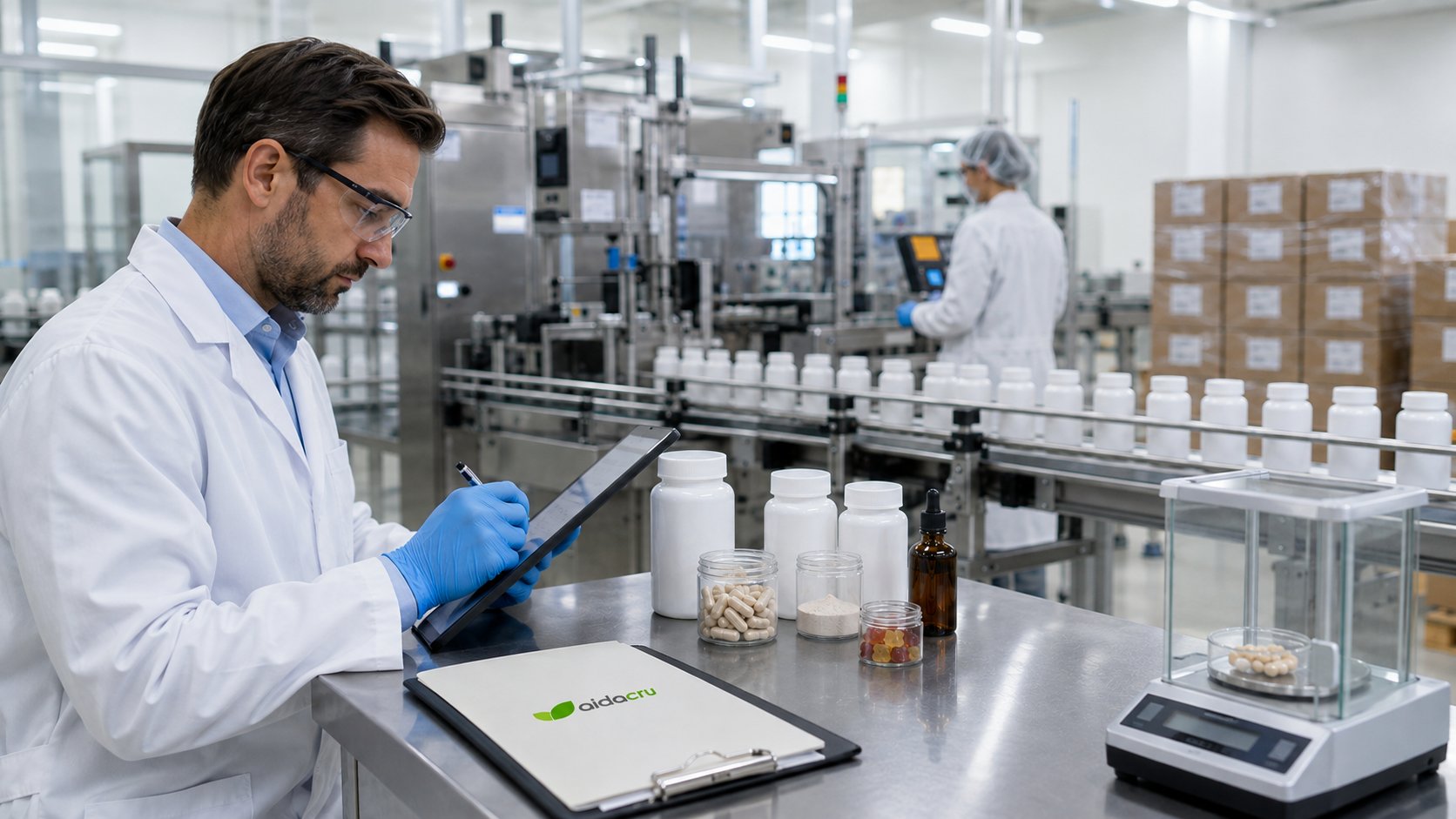
An AI supplement formula is a machine-generated proposal that may organize ingredients, target quantities, dosage-form ideas, and product-positioning inputs. It can accelerate briefing and comparison, but it does not establish that the formula is safe, compliant, stable, analytically testable, commercially viable, or manufacturable on a specific production line.
An AI-generated formula can be a useful starting brief. It can organize ingredient ideas, compare dosage forms, and expose questions that a brand team has not yet considered. But it is not a finished manufacturing instruction, a regulatory review, or evidence that the proposed serving will fit the selected dosage form.
For a supplement buyer, the practical distinction is simple: a formula concept describes what the brand wants to build; a manufacturing specification defines what the factory can consistently make, test, package, and release.
Moving from one to the other requires documented decisions about ingredient identity and grade, active load, serving size, processing behavior, test methods, packaging, and label declarations. Those decisions still require qualified human review.
What an AI Formula Brief Can—and Cannot—Do
AI is most useful during early product definition. A well-structured brief may identify the target customer, intended product role, preferred ingredients, dosage form, flavor direction, package concept, and commercial constraints.
That can make an initial manufacturer discussion more productive. It does not answer several production-critical questions:
Which exact ingredient grade and supplier specification will be used?
Does the proposed quantity refer to raw material weight or active content?
Will the full serving fit one capsule, gummy, stick pack, or dropper dose?
How will low-dose ingredients be distributed through the batch?
Which attributes need in-process controls and finished-product specifications?
Is the package compatible with the finished formula and intended shelf-life plan?
Does the proposed label match the final serving and formula composition?
These are not writing problems. They are formulation, manufacturing, quality, packaging, and regulatory-review decisions.
A Hypothetical Review: What Changes Before Sampling
A buyer may arrive with an AI brief that looks complete because it includes ingredient names, target amounts, a serving direction, and a bottle concept. The manufacturing review still has to translate those ideas into controlled inputs.
| AI brief says | Manufacturing review still needs to resolve |
|---|---|
| Ingredient A — 500 mg | Is 500 mg the raw-material weight or the intended active contribution? Which grade, assay, carrier, and supplier specification apply? |
| Standardized extract — 300 mg | What standardization basis is used, and what total material quantity is required to deliver the target? |
| Two capsules per serving | Will the complete formula, including excipients, fit the selected capsule size with acceptable filling behavior? |
| 60-count bottle | Does the serving design produce the intended days of supply, and does the selected bottle fit the final capsule count and label panel? |
| “Quality tested” | Which finished-product attributes, methods, documents, and approval responsibilities are actually required for this project? |
This example is illustrative, not an Aidacru customer case or a production result. Its purpose is to show why an apparently complete AI concept can still contain unresolved manufacturing decisions.
Five Reviews That Turn a Concept Into a Production Specification
| AI concept output | Production specification must define |
|---|---|
| Ingredient name | Exact identity, grade, source, assay, carrier, and specification |
| Suggested quantity | Calculation basis, complete component load, and amount per serving |
| Dosage-form idea | Capacity, process behavior, serving count, and equipment fit |
| Packaging image | Actual component specifications, compatibility, and line fit |
| Marketing language | Reviewed label declaration, claims direction, and approval owner |
1. Lock the ingredient identity and grade
A common name is not a complete purchasing specification. Two materials sold under the same ingredient name can differ in assay, source, carrier, particle-size distribution, moisture, density, flavor, and dispersibility.
Those differences can affect blend uniformity, capsule fill, powder flow, gummy texture, liquid clarity, and label calculations. The project team should identify the exact material specification, dietary-ingredient contribution, other ingredients, and any relevant allergen or handling information before costing and sampling are treated as final.
2. Recalculate the total active and component load
The front of a concept sheet may show only the featured actives. Production must account for the complete formula: actives, standardized extract calculations, carriers, processing aids, flavors, acids, sweeteners, colors, shell materials, and justified overages where applicable.
This is where an attractive concept may become too large for the intended serving. A capsule size has a fixed volume, not a universal milligram capacity. A gummy also has limits created by piece weight, water activity, texture, pH, and the behavior of the active ingredients.
3. Confirm dosage-form capacity and process behavior
Capacity is not only a geometry question. Powder bulk density and flow affect capsule and sachet filling. Particle-size differences can increase segregation risk. Viscosity and sedimentation affect liquid filling and dispensing. Heat, acidity, and moisture can affect gummy ingredients.
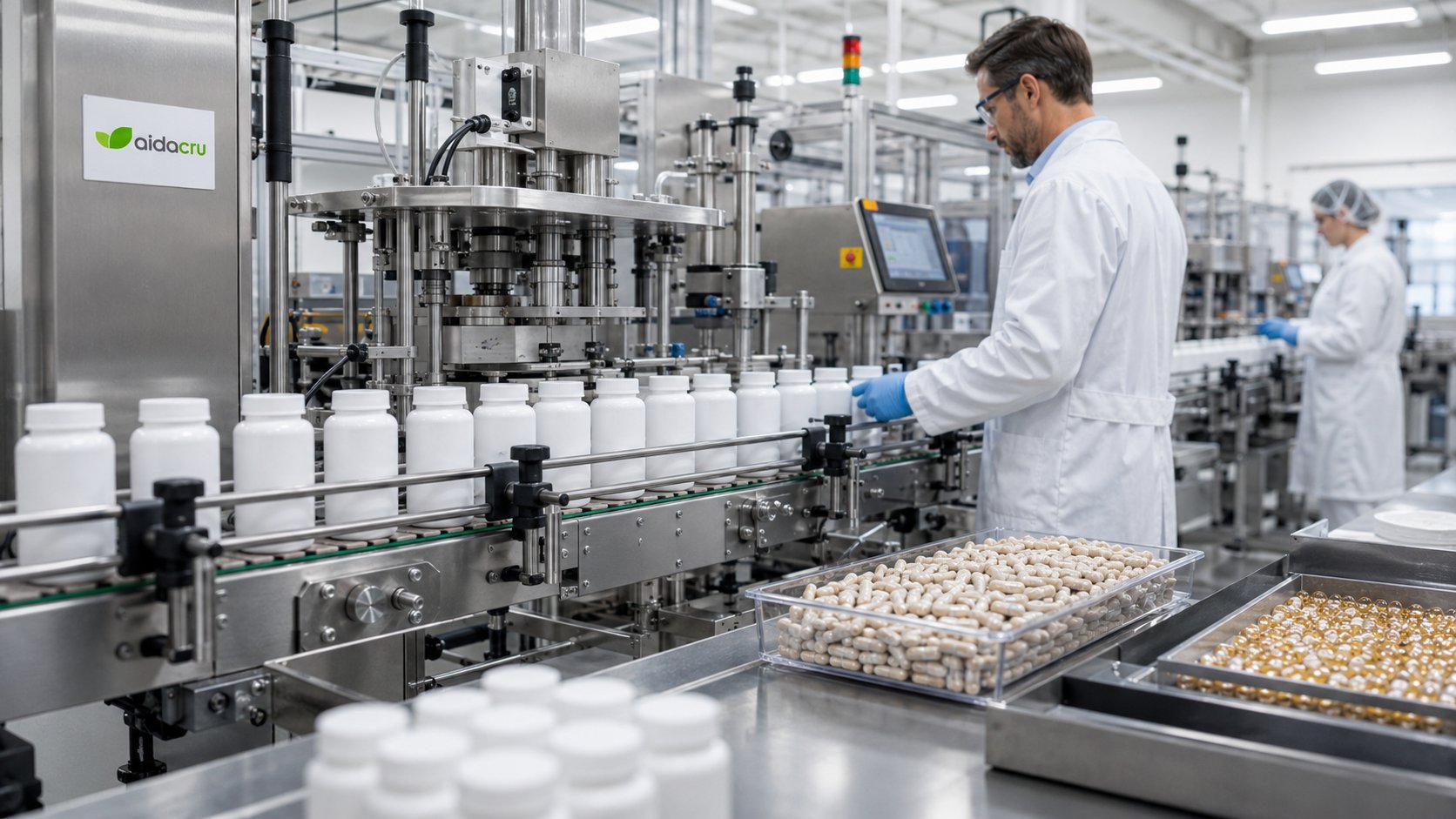
A feasibility review should therefore connect the formula to the intended equipment and process. Depending on the dosage form, that may include density and flow characterization, a premix strategy, flavor work, pH and viscosity targets, piece-weight targets, or a packaging-line trial.
4. Design a serving the customer can actually use
The proposed dose, number of units per serving, servings per day, days of supply, package count, and label directions need to tell one consistent story.
If a capsule formula requires several large capsules per serving, the brand may need to change the dose, capsule size, or format. If a powder serving occupies more volume than expected, the tub and scoop may need to change. These decisions influence consumer use, package size, freight, and margin—not just formulation.
5. Define specifications, methods, packaging, and approval responsibility
For U.S. dietary supplements, 21 CFR Part 111 requires a master manufacturing record for each unique formulation and batch size. The record must identify components, quantities, relevant specifications, packaging, labels, sampling or testing references, and control instructions.
Before bulk production, the parties should know which document controls the formula version, what the finished-product specification includes, which methods will be used, who approves artwork, and who releases the final product. A polished AI brief cannot replace that chain of control.
What to Send First—and What Can Wait
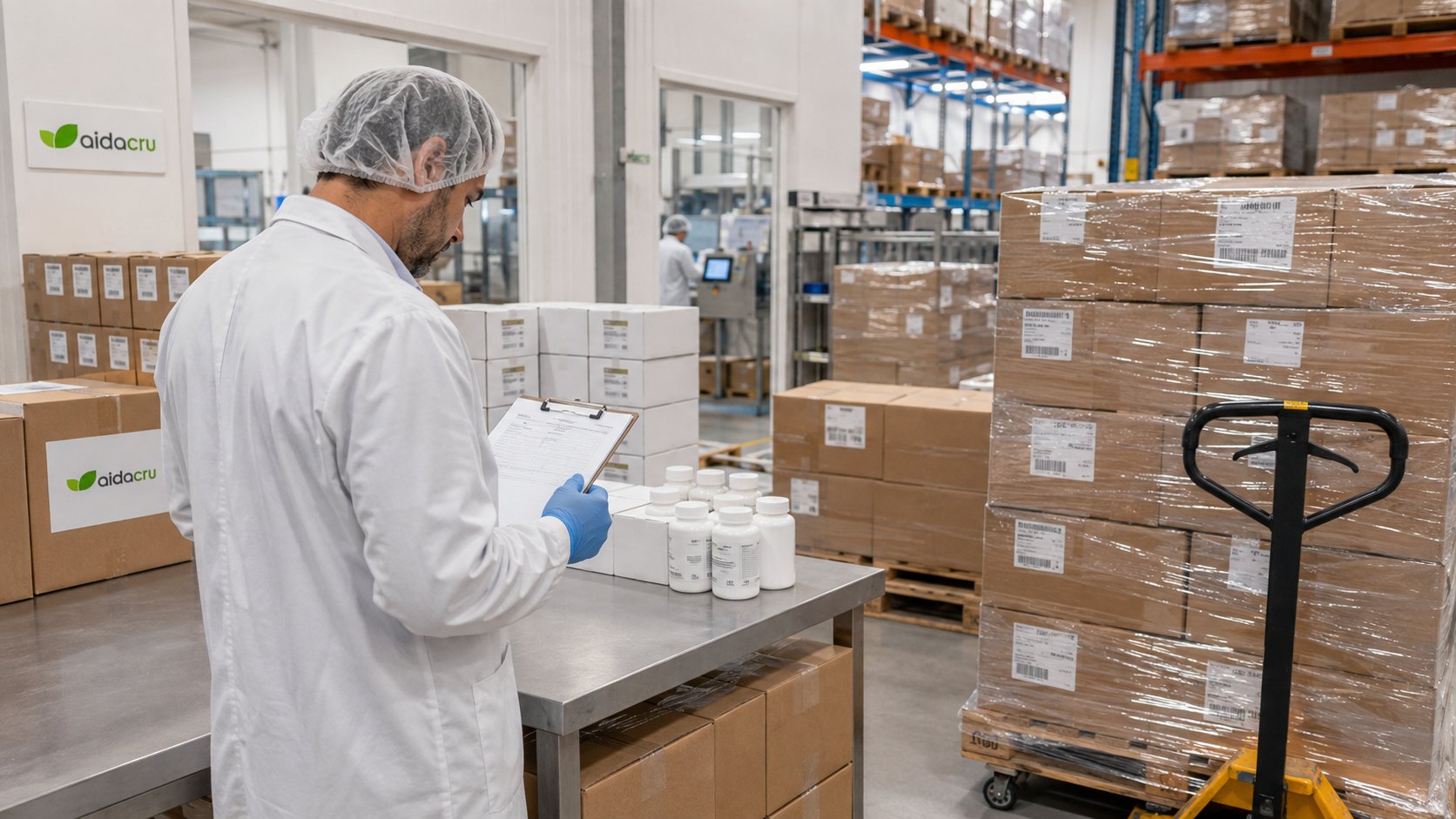
A useful first contact does not require a finished technical dossier. If you only have an AI draft, start with:
the draft formula or target actives; and
the target market.
If those basics are available, add the details that make the feasibility review faster:
dosage form and target serving;
preferred ingredient grades or acceptable alternatives;
flavor, sweetener, color, or dietary-positioning requirements;
package format, count, and days of supply;
forecast and target launch window;
required documents or target-market review needs; and
the person responsible for formula, sample, label, and packaging approval.
Ask the manufacturer to return an open-issues list, not only a unit quote. The list should separate confirmed items, proposed alternatives, items requiring samples or trials, and items still waiting for buyer approval.
Key Takeaways
AI can accelerate concept development, but it cannot establish production feasibility by itself.
Ingredient grade, total formula load, dosage-form capacity, serving design, specifications, and packaging must be reviewed together.
The controlled manufacturing documents—not the original prompt—must become the project’s source of truth.
Buyers reduce rework when they request a feasibility review before approving labels or ordering packaging.
Have Only a Draft Formula?
Send Aidacru the formula and target market first. If you already know the serving, dosage form, package concept, forecast, or launch timing, include them as well. We can use those inputs to identify the open manufacturing questions that should be resolved before sampling, artwork approval, or a bulk order.
Frequently Asked Questions
Can I send an AI-generated formula directly to a supplement manufacturer?
Yes, as a concept brief. Label it as a draft and include at least your target market and intended dosage form. The manufacturer should review and revise the concept before it is treated as a production specification.
Does an AI-generated ingredient list show whether the formula will fit a capsule?
No. Actual fit depends on the complete component load, ingredient grades, powder density, flow, capsule size, excipients, and filling process.
What should a manufacturer confirm before giving a firm quote?
At minimum: formula basis, ingredient specifications, serving and dosage form, package format, forecast, testing or documentation scope, and unresolved feasibility questions. If major inputs are still open, the quote should be identified as preliminary.
Is AI review a substitute for regulatory, quality, or formulation review?
No. Qualified regulatory, quality, formulation, and manufacturing personnel remain responsible for their respective decisions.
What is the difference between a formula brief and a master manufacturing record?
A formula brief communicates the commercial concept. A master manufacturing record is a controlled manufacturing document for a unique formulation and batch size that defines components, quantities, relevant specifications, packaging, labels, and production-control instructions under the applicable quality system.
Continue Your Manufacturing Research
About Aidacru
Aidacru works with B2B supplement brands, sourcing teams, distributors, Amazon sellers, and DTC operators on private-label and custom supplement projects. For an AI-generated concept, the useful manufacturing conversation is not whether the prompt looks complete, but which formula, serving, dosage-form, packaging, testing, and approval decisions are still open. Supported capabilities, tests, MOQ, pricing, and timing remain project-specific and must be confirmed.