

Supplement Sample Approval Checklist: What to Lock Before Bulk Production
Date: 2026-07-29 Categories: Supplement Blog Hits: 222
“The sample tastes good” is not an authorization to manufacture thousands of units.
Taste matters, but a bulk-production decision also depends on the formula version, serving size, measurable product attributes, manufacturability, packaging, artwork, and change control. If these items are not linked in writing, the buyer and manufacturer may approve different products without realizing it.
This guide explains how to turn sample feedback into a controlled production decision.
Short Answer
Before bulk production, the buyer should approve a uniquely identified sample and the written specifications that define it. The approval should state what was reviewed, what remains open, which packaging and label versions apply, who authorized the decision, and which future changes require new approval.
A buyer-approved reference sample gives both sides a shared benchmark. It does not replace the master manufacturing record, batch production record, in-process checks, finished-product testing, or final QA release.
The Four Samples Buyers Commonly Confuse
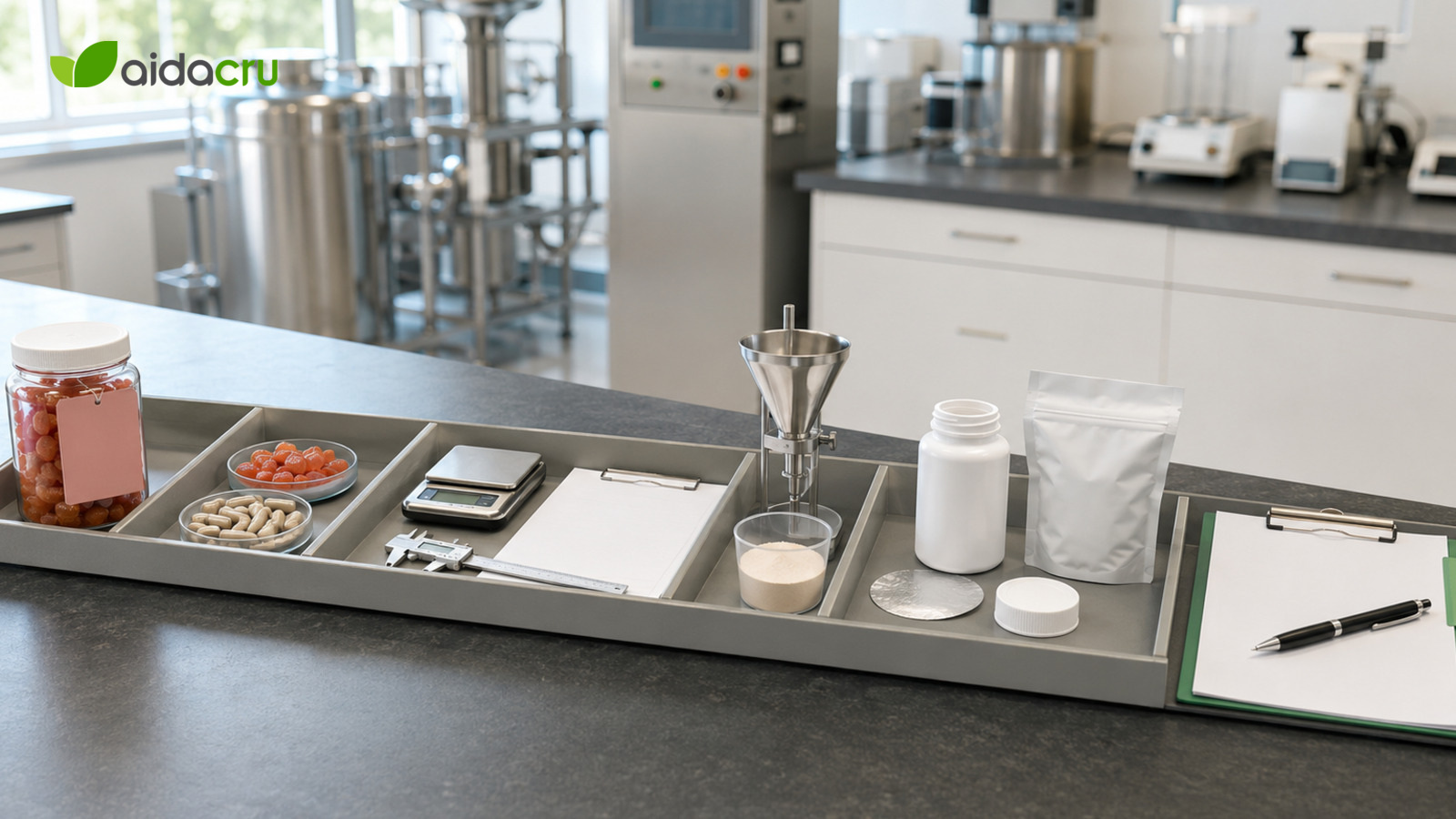
1. Development sample
Purpose: determine whether the formula direction is commercially acceptable.
It may be used to compare:
- flavor;
- sweetness;
- color;
- texture;
- format;
- serving concept;
- packaging direction.
A development sample may be made by hand or under conditions that do not fully represent the intended production line. It does not prove that the formula can scale without adjustment.
2. Pilot, scale-up or line sample
Purpose: evaluate whether the formula and package behave on the intended or representative production process.
It may reveal:
- powder feeding problems;
- segregation during transfer;
- gummy deposition or drying differences;
- softgel seam or drying behavior;
- liquid filling and closure issues;
- sachet dosing or seal contamination.
The exact terminology varies by manufacturer. Buyers should ask what the sample represents rather than relying on its name.
3. Buyer reference or “golden” sample
Purpose: preserve an agreed sensory and physical reference for project communication.
“Golden sample” is useful industry language, not an FDA-defined regulatory category. It should be linked to:
- sample code;
- formula version;
- production or preparation date;
- package used;
- storage conditions;
- approved attributes;
- photographs;
- approval record.
4. Representative and reserve samples
These have defined quality-system or regulatory purposes and should not be confused with the buyer's flavor reference. FDA dietary-supplement CGMP guidance discusses representative samples, reserve samples, master manufacturing records and batch production records as separate controls.
Why a Sample Can Pass Sensory Review but Fail Production Readiness
A sample may be attractive and still contain unresolved risks.
Examples:
- a flavored powder tastes right but bridges in the production hopper;
- a gummy has the right flavor before reaching its final conditioning endpoint;
- a capsule formula fits during hand filling but exceeds practical volume on the selected machine;
- a liquid is homogeneous immediately after mixing but sediments during storage;
- a softgel looks acceptable before the shell and fill have reached equilibrium;
- a sachet has the right fill weight but powder contaminates the seal zone;
- the product is approved while the serving size on the draft label reflects an older version.
The approval process should therefore convert subjective feedback into measurable, traceable and manufacturable requirements.
Step 1: Confirm Exactly Which Sample Is Being Reviewed
Every approval record should identify:
- project name;
- product/SKU name;
- dosage form;
- sample code;
- formula version;
- flavor/color version;
- preparation date;
- batch or development reference;
- packaging used for the sample;
- storage instructions;
- date received;
- reviewer;
- approval status.
Avoid approvals by message such as “Sample 2 is good.” Use an identifier that cannot be confused with another shipment or formula.
Step 2: Lock the Formula, Serving Size, and Unit Count
Confirm:
- ingredient list and ingredient forms;
- quantity per serving;
- serving size;
- units per serving;
- servings per container;
- target net weight or count;
- excipients, carriers, sweeteners, flavors and colors;
- allergen or dietary-positioning requirements;
- target market and claims direction.
A change in serving size or format can alter:
- capsule or gummy count;
- powder scoop volume;
- sachet dimensions;
- bottle size;
- Supplement Facts data;
- unit economics;
- consumer instructions.
Do not release packaging artwork while these fields remain unstable.
Step 3: Translate Sensory Approval into Written Criteria
“Not too sweet” and “bright orange” are useful feedback, but they are difficult to reproduce without a reference.
Use:
- a retained physical reference where appropriate;
- approved photographs under controlled lighting;
- flavor-code and color-code references;
- texture description;
- acceptable visual range;
- measurable criteria such as pH, piece weight, viscosity or water activity when relevant.
Not every sensory property needs a numerical limit. The objective is to define which attributes are controlled by measurement, which are compared with a reference and which can show normal process variation.
Step 4: Apply Dosage-Form-Specific Production Checks
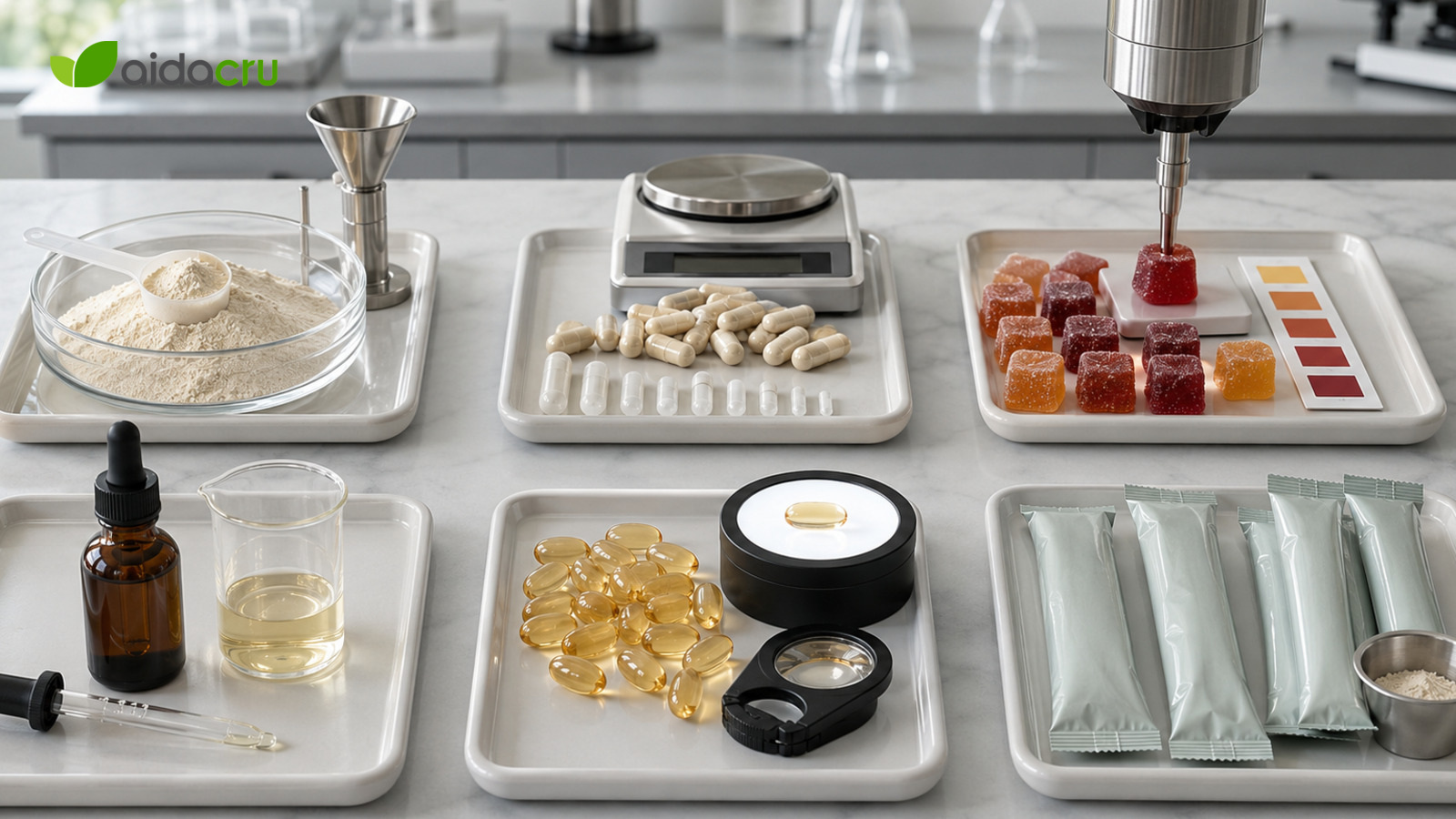
Powders
Review:
- appearance, aroma, flavor and dispersibility;
- serving mass and scoop;
- bulk density;
- particle-size or grittiness concerns;
- flow and cohesiveness;
- moisture sensitivity;
- expected settling in the tub;
- blend-uniformity strategy;
- fill-weight and net-weight controls.
Why it matters:
Powders with different particle size or density can segregate during discharge and transfer even after blending. A low-dose component may require a premix or controlled addition strategy. Powder that is too cohesive may feed inconsistently; very free-flowing blends may separate.
Approval question:
“Was the sample made by a process that represents the intended blend and filling operation?”
Hard capsules
Review:
- capsule shell type, size and color;
- appearance and lock;
- formula bulk density;
- target fill weight and tolerance;
- number of capsules per serving;
- shell/fill compatibility;
- count per bottle;
- disintegration or other applicable finished-product criteria.
Why it matters:
Capsule filling is volume-dependent. A capsule size does not guarantee a fixed mass. Bulk density, compressibility, flow and the filling mechanism influence the actual fill.
Approval question:
“Has the selected capsule size been verified with the actual production blend?”
Gummies and chewables
Review:
- hydrocolloid system;
- shape, color, flavor and finish;
- piece weight;
- pieces per serving;
- active load;
- pH and soluble solids when they are relevant to the formula;
- water activity and moisture;
- texture at the intended conditioning endpoint;
- sticking and deformation;
- active assay and stability plan;
- package barrier.
Why it matters:
The gummy process may include syrup preparation, gelling-system hydration, cooking, active addition, acid adjustment, depositing, cooling, conditioning and finishing. The timing and conditions can affect active stability and texture. A freshly produced gummy may not represent the final packed product.
Approval question:
“Is this the fully conditioned product in the final retail package?”
Powder stick packs and sachets
Review:
- fill mass;
- bulk density and powder flow;
- sachet dimensions;
- film specification;
- print registration;
- dosing method;
- seal appearance and seal zone cleanliness;
- opening and pouring behavior;
- carton count and orientation.
Why it matters:
Static or dusty powder can contaminate the seal. The film's sealing window must match machine conditions, and the target serving must fit the practical package dimensions.
Approval question:
“Has the formula been tested in the intended film and filling format?”
Liquids and drops
Review:
- appearance, flavor and odor;
- pH;
- viscosity or specific gravity when they affect filling or dispensing;
- solution, suspension or emulsion status;
- sedimentation or separation;
- resuspendability where relevant;
- target fill;
- bottle and closure;
- dropper or pump delivery;
- torque and leak behavior;
- microbial and stability plan.
Why it matters:
Viscosity affects both filling and dispensing. A dropper may deliver differently after a formula change. Bottle, liner, bulb and pipette materials must be considered together with the formula.
Approval question:
“Does the sample demonstrate the intended behavior over time, not only immediately after shaking?”
Softgels
Review:
- shell system, color, opacity and shape;
- fill specification and homogeneity;
- target fill weight;
- shell/fill compatibility;
- seam appearance and leakage;
- drying endpoint;
- sticking, brittleness or deformation;
- oxidation-control strategy for sensitive oils;
- bottle size and count;
- the appropriate rupture, disintegration, or other release criteria.
Why it matters:
Softgel production combines shell-mass preparation, fill preparation, rotary-die encapsulation and staged drying. The capsule can change as moisture equilibrates between shell, fill and environment.
Approval question:
“Was the sample evaluated after the relevant drying and equilibration period?”
Step 5: Separate Buyer Sign-Off from Final QA Release
Buyer approval commonly covers:
- commercial flavor;
- color;
- shape;
- texture;
- product concept;
- packaging appearance;
- label proof.
Quality release commonly evaluates the manufactured batch against established specifications and records. Depending on the product, this may include:
- identity;
- strength or assay;
- composition;
- contaminants;
- microbiological attributes;
- physical attributes;
- moisture or water activity;
- package and label checks.
The analytical method must work for the finished dosage form. A method used for raw powder may not recover an active accurately from a gummy or oil softgel.
The manufacturer should not ask the buyer to “approve” laboratory results the buyer is not qualified to interpret. Instead, responsibilities for specification approval, testing, review and release should be defined.
Step 6: Approve Packaging as a Technical System
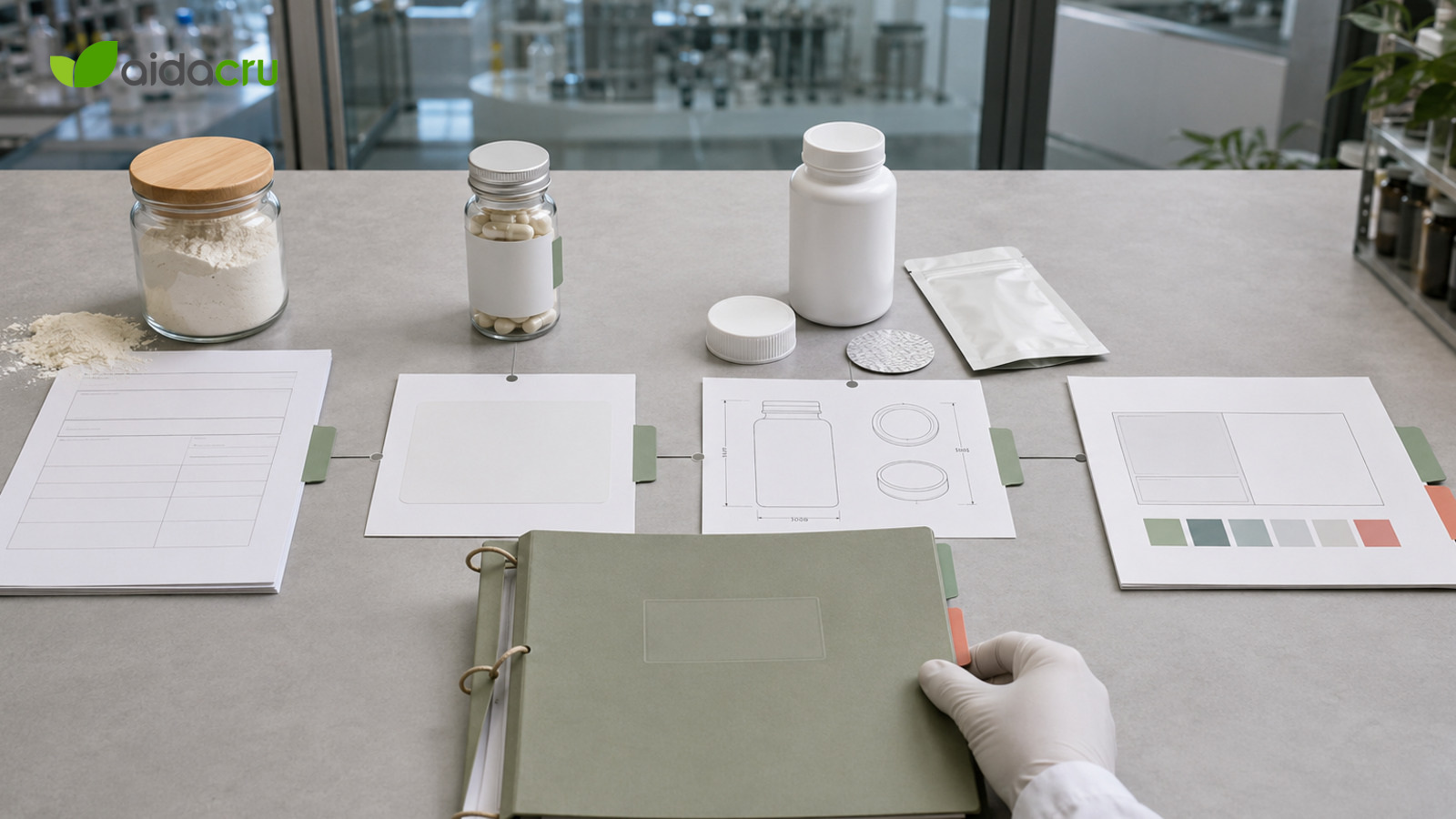
Product approval and packaging approval should be connected but separately recorded.
Confirm:
- primary container and material;
- cap, liner and closure;
- induction seal or flexible seal;
- desiccant, if justified;
- count or net weight;
- label size and material;
- lot/expiry coding location;
- carton or shipper;
- package-version code;
- line-trial status;
- integrity, distribution and stability plan.
A packaging mockup confirms appearance and fit. It may not prove line performance, seal integrity or product compatibility.
Step 7: Control Artwork and Label Data
Artwork approval should verify:
- product name;
- net quantity;
- serving size;
- servings per container;
- ingredient names and quantities;
- directions;
- warnings;
- allergen statements;
- manufacturer/distributor information;
- market-specific mandatory content;
- barcode and coding area;
- version number and approval date.
Market-specific labels and claims should receive qualified review. Manufacturer feedback is not a substitute for legal advice in the target market.
Step 8: Define Post-Approval Change Control

Create categories before changes occur.
Documentation-only change
Example: correction of an internal reference that does not change the product or package.
Review-required change
Example: supplier or component update that may affect equivalence and requires documented technical assessment.
New-sample-required change
Examples:
- new flavor;
- changed sweetener level;
- changed gummy acid system;
- new capsule shell;
- changed powder particle grade;
- changed liquid closure;
- changed softgel fill or shell system.
Full reapproval
Examples:
- changed serving size;
- new dosage form;
- material formula change;
- new primary packaging system;
- claim or label change connected to formulation;
- change with an unresolved stability impact.
The precise category depends on the quality agreement and project. The point is to prevent an apparently small change from bypassing the correct review.
Recommended Approval Statuses
Use one of four clear statuses:
- Approved: all defined gates are complete.
- Approved with documented conditions: specific non-blocking items and owners are listed.
- Revision required: changes are defined and a new version is expected.
- Rejected: the sample should not proceed.
Avoid “basically approved,” “looks fine” or “go ahead but fix later.”
Bulk-Production Authorization Checklist
Product identity
- ☐ SKU and sample code match.
- ☐ Formula and flavor versions match.
- ☐ Target market and dosage form are correct.
- ☐ Approved reference is retained or documented.
Formula and serving
- ☐ Ingredient forms and amounts are controlled.
- ☐ Serving size and unit count are final.
- ☐ Net weight/count and package size agree.
- ☐ Claims direction has been reviewed.
Manufacturability
- ☐ Dosage-form-specific risks are documented.
- ☐ Scale-up or line verification need is resolved.
- ☐ In-process control plan is defined.
- ☐ Finished-product specifications and methods are defined.
- ☐ The stability plan uses the final retail package or a justified equivalent.
Packaging
- ☐ Container, closure, liner and seal versions are final.
- ☐ Desiccant decision is documented.
- ☐ Artwork dimensions match components.
- ☐ Coding, carton and shipper requirements are final.
- ☐ Relevant line or package testing is planned.
Project control
- ☐ Approval owner and date are recorded.
- ☐ Open items have owners and deadlines.
- ☐ Change-control rules are accepted.
- ☐ Order quantity, component quantities and overage assumptions are reconciled.
- ☐ Bulk production is authorized in writing.
Common Approval Failures
Approving a flavor without approving the serving size
Flavor concentration often depends on the serving. Changing the serving later can change both taste and cost.
Approving a hand sample as if it were a line sample
Manual preparation may not reproduce full-scale heating, mixing, transfer, deposition or drying.
Treating a photograph as the only color reference
Lighting, screen calibration and camera processing can change appearance.
Changing packaging after stability work begins
The evidence may no longer represent the final retail package.
Authorizing production with multiple draft files
Formula, label and packaging versions must be reconciled into one controlled approval set.
Frequently Asked Questions
What is a supplement “golden sample”?
It is an agreed physical reference used for sensory and product comparison. It is not an FDA-defined category and does not replace manufacturing records, specifications, or final QA release.
Does sample approval guarantee an identical bulk batch?
No. Approved criteria, process controls and reference comparisons reduce ambiguity, but normal variation and scale effects still need to be controlled.
Who should approve the sample?
The product owner should identify commercial, technical, quality, regulatory and packaging reviewers based on the project. One person should own the final authorization record.
Is a packaging mockup a production sample?
Not necessarily. A mockup may confirm appearance, dimensions and artwork placement without representing line sealing, filled-product behavior or distribution.
When is a line trial needed?
When formula or component behavior on the intended equipment remains uncertain—for example, dusty stick-pack powder, a new closure system or a gummy with unusual physical properties.
What happens if the formula changes after approval?
The change should be assessed against predefined change-control rules. It may require documentation, technical review, a new sample or full reapproval.
Should buyers keep a sample?
Where appropriate, retain the sample under defined conditions and record its code, date, photos and approval status. Ask the manufacturer how buyer references relate to formal reserve samples.
When should bulk production begin?
Only after the controlled formula, specifications, packaging, label data, approvals and commercial authorization are aligned.
Request a Controlled Sample-Approval Worksheet
Send us:
- product brief;
- formula or ingredient list;
- dosage form;
- target serving;
- target market;
- packaging concept;
- sample feedback;
- desired launch window.
We’ll separate the open questions into formula, production, packaging, and documentation decisions. Exact sample stages, testing, scale-up requirements, MOQ, and timing must be confirmed for the project.
Key Takeaways
- Sensory approval is only one production gate.
- Identify the exact sample and formula version before commenting.
- Translate subjective preferences into references or measurable criteria.
- Apply dosage-form-specific manufacturability checks.
- Keep buyer sign-off separate from final QA release.
- Link product, packaging and artwork through version control.
- Define which post-approval changes require new sampling.