
Allergen and Cross-Contact Questions to Ask a Supplement Manufacturer
Date: 2026-08-03 Categories: Supplement Blog Hits: 232
“We clean the line” is not a complete allergen-control answer.
It describes an activity. It does not tell a buyer which allergens are present, where cross-contact could occur, how the cleaning method was selected, how labels are controlled, or what evidence supports the process.
For an allergen-sensitive supplement project, the objective is not to collect one reassuring sentence. It is to understand whether the controls match the actual materials, equipment, process, package, and label.
What a Serious Allergen Review Should Cover
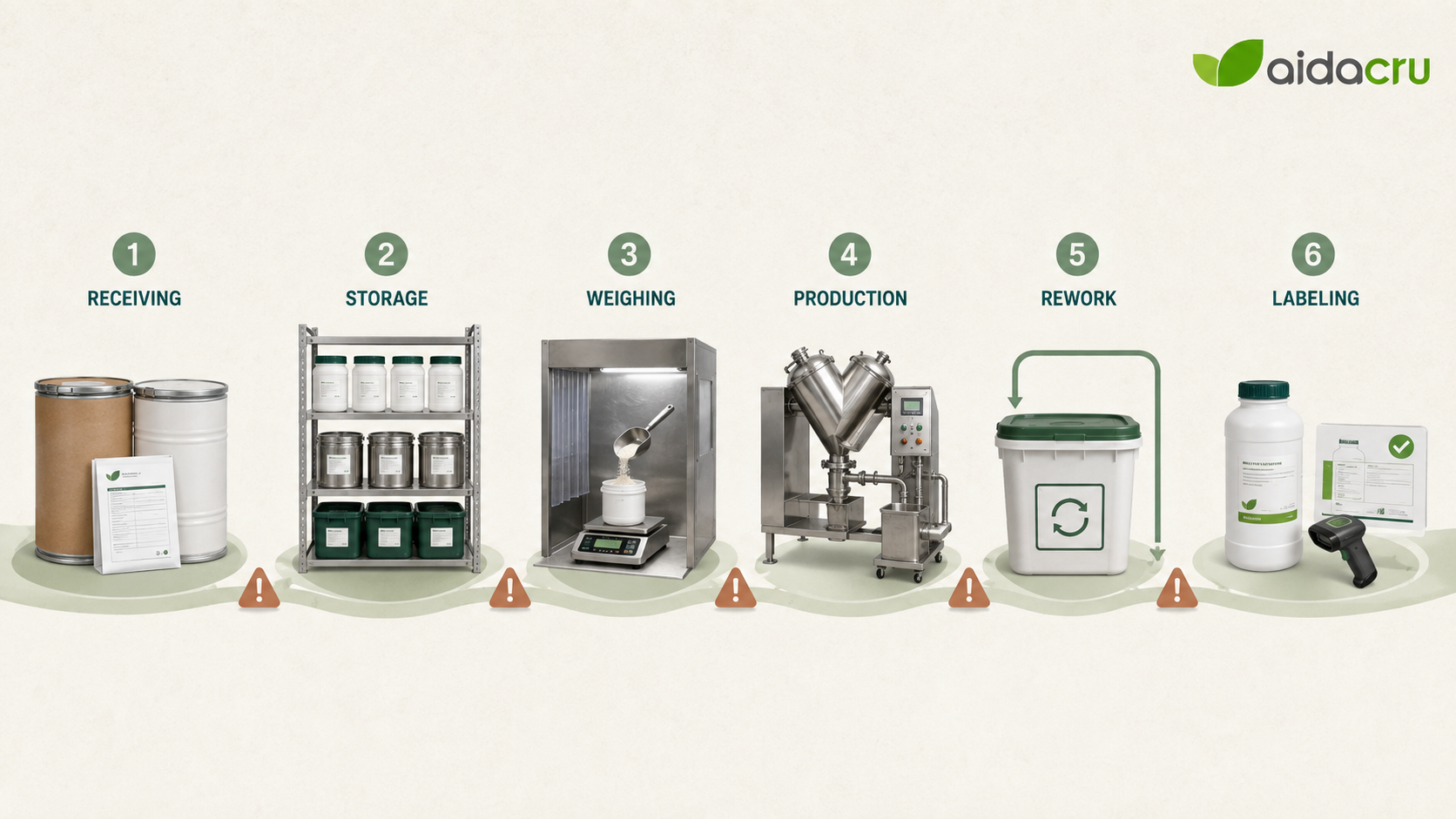
Before approving a supplement manufacturer, ask how the facility identifies allergenic materials, qualifies suppliers, segregates ingredients, schedules production, clears and cleans shared equipment, assesses cleaning effectiveness, controls rework, verifies labels, handles deviations, and documents release decisions.
The applicable legal requirements depend on the facility’s activities and product scope. U.S. dietary supplement operations are subject to 21 CFR Part 111, and FDA explains that Part 117 subpart B CGMP requirements may also apply. Facilities handling dietary ingredients or other food raw materials may have additional Part 117 applicability. Brands should obtain qualified regulatory advice for their specific product and supply chain.
Start by Separating Three Different Questions
1. Is the Allergen Intentionally Present?
If an ingredient is derived from a major food allergen or otherwise requires declaration, the label must be reviewed under the applicable rules. In the U.S., FDA identifies nine major food allergens: milk, egg, fish, Crustacean shellfish, tree nuts, peanuts, wheat, soybeans, and sesame.
2. Could Allergen Cross-Contact Occur?
FDA defines allergen cross-contact as the unintentional incorporation of a food allergen into food. In a supplement operation, potential routes can include shared storage, weighing tools, transfer containers, blenders, conveyors, filling equipment, dust, rework, employee practices, or packaging and label mix-ups.
3. What Label Position Is the Brand Requesting?
An ingredient declaration, a Contains statement, an advisory statement, and a “free-from” claim are not interchangeable. Advisory labeling is not a substitute for appropriate manufacturing controls. A brand should not choose label language before understanding the formula, supplier information, process, and cross-contact assessment.
Eleven Questions for Manufacturer Due Diligence
1. Which Major Allergens Enter the Facility?
Ask for a current allergen profile by ingredient and product family, not only a yes/no statement. Include materials used in production, rework, processing aids where relevant, employee food controls where applicable, and packaging or label implications.
Buyer consequence: the facility cannot assess a route it has not identified.
2. How Are Supplier Allergen Statements Reviewed?
Allergen status begins with the raw material. Ask how supplier declarations, specifications, composition, carriers, flavors, and change notifications are reviewed and connected to the approved material record.
Buyer consequence: a botanical extract or flavor can introduce an unexpected carrier or allergen issue even when the active ingredient name looks familiar.
3. How Are Allergenic Materials Identified and Segregated?
Controls may involve labeling, designated storage locations, closed containers, physical separation, controlled dispensing, dedicated utensils, or other risk-based measures.
Buyer consequence: poor identification or handling can create cross-contact before the ingredient reaches the main production line.
4. How Is Production Scheduled?
Facilities may use campaign production, move from non-allergen to allergen-containing products, schedule certain runs at the end of a cycle, or apply another documented sequence.
Buyer consequence: scheduling can reduce risk and cleaning complexity, but it does not replace effective cleaning and line clearance.
5. What Does Line Clearance Cover?
Line clearance should address more than visible product. Ask how the team accounts for open materials, labels, printed components, scoops, bins, tools, documents, and residual product from the previous run.
Buyer consequence: an allergen event can also be a label-control failure.
6. How Was the Cleaning Method Selected?
The method should fit the allergen, soil, equipment design, surface, access points, and cleaning process. A method effective for routine sanitation or microbial control may not automatically demonstrate allergen removal.
Buyer consequence: a generic wash instruction may be inadequate for a difficult-to-clean blender, gasket, screen, hose, or textured surface.
7. How Is Cleaning Effectiveness Assessed?
Ask what evidence supports the cleaning method and how routine performance is verified. Depending on the risk and program, this may involve visual inspection, documented parameters, product-specific residue testing, allergen-specific methods, rinse or swab approaches, or another justified method.
Do not assume one swab location, one kit, or one result proves the entire line is controlled.
Buyer consequence: the method, sampling locations, detection capability, acceptance criteria, and corrective action all matter.
8. How Is Rework Controlled?
Rework can move an allergen from one batch or product into another if its identity, status, quantity, and authorized use are not tightly controlled.
Buyer consequence: even a well-cleaned line can be undermined by poorly controlled rework.
9. How Are Labels and Packaging Components Verified?
Ask how the correct label is issued, reconciled, applied, and checked against the formula and allergen declaration. Confirm how obsolete or unused labels are controlled.
Buyer consequence: undeclared allergen risk can result from the wrong label as well as from cross-contact.
10. What Happens When a Deviation Occurs?
The program should define who investigates, how affected material is held, what evidence is reviewed, who makes the disposition decision, and how corrective action is documented.
Buyer consequence: a supplier’s response to a deviation often reveals more about its quality system than a perfect questionnaire.
11. What Change Notifications Will the Brand Receive?
Supplier, ingredient, carrier, formula, equipment, cleaning method, production site, label, or process changes may affect the allergen assessment.
Buyer consequence: the brand needs a defined route to review a material change before the next batch ships.
Cleaning Validation and Routine Verification Are Not the Same
These terms are often used loosely.
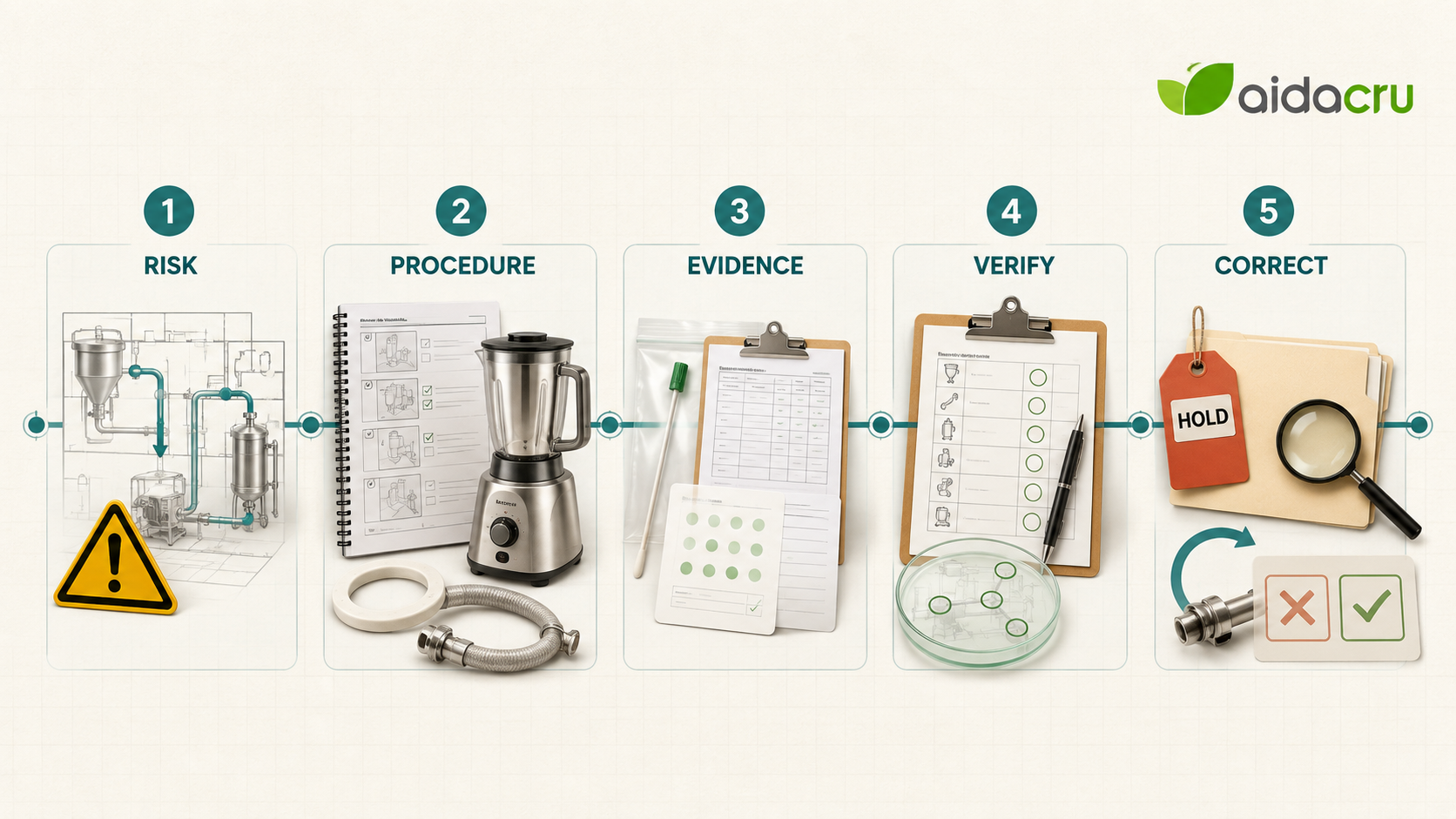
- Cleaning procedure: The written steps used to clean the equipment or area.
- Evidence the procedure is effective: The documented basis showing that the selected procedure can control the identified allergen risk under defined conditions.
- Routine verification: Checks used to confirm the procedure was performed and remains effective during normal operations.
- Corrective action: The response when the procedure or verification result does not meet the acceptance criteria.
The terminology and required evidence should be defined by the facility’s quality and food-safety system. A buyer should focus on the logic: identified risk, selected control, evidence, routine monitoring or verification, and documented response.
Manufacturer Answer Evaluation Table
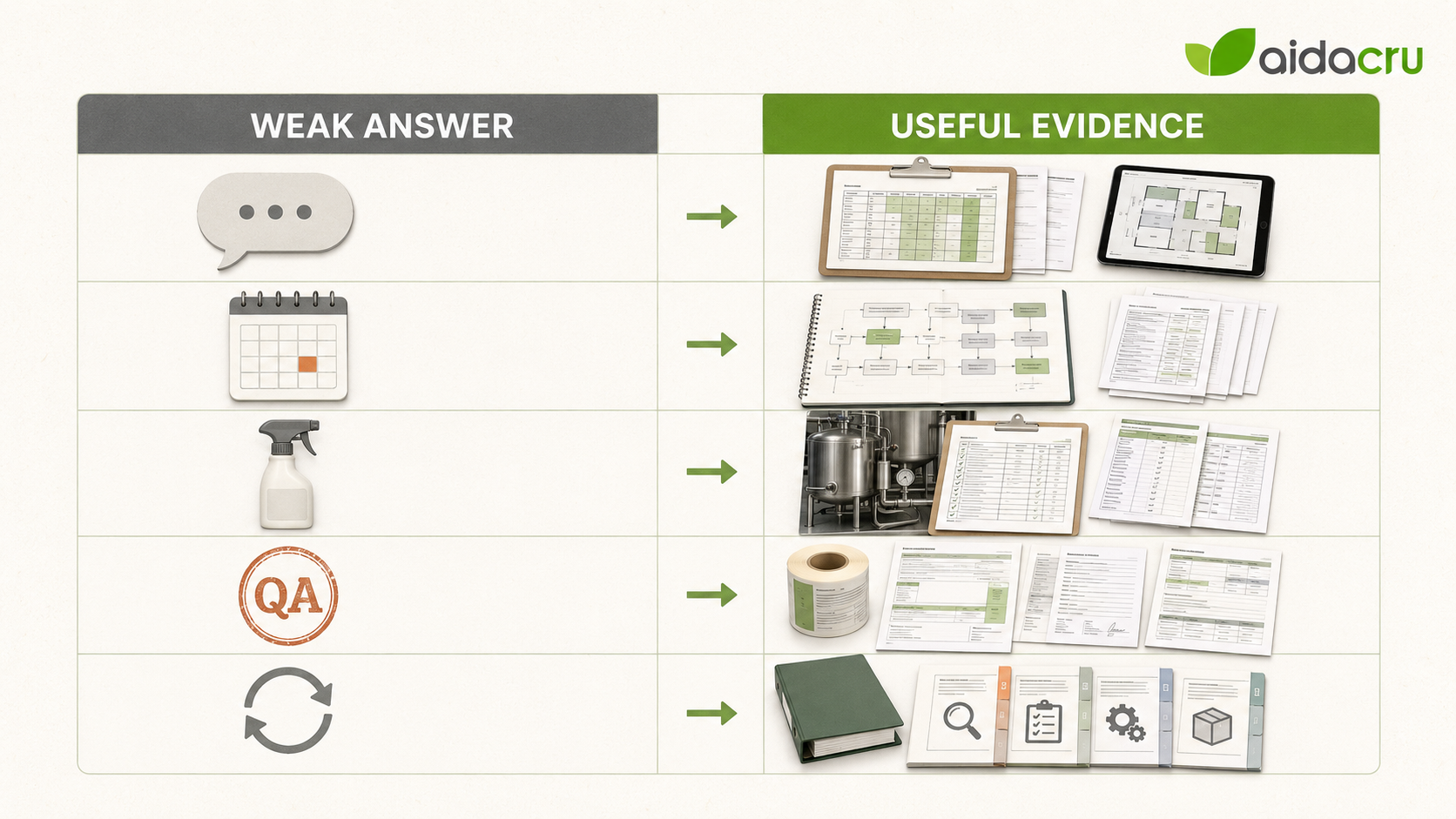
| Buyer question | Weak answer | More useful evidence |
|---|---|---|
| Which allergens are handled? | “We handle common allergens.” | Current facility/ingredient allergen matrix and scope explanation |
| How are runs scheduled? | “We schedule carefully.” | Written sequencing logic tied to allergen groups and cleaning |
| How is cleaning controlled? | “The equipment is sanitized.” | Product/equipment-specific procedure, parameters, evidence, and records |
| How are labels controlled? | “QA checks them.” | Approved master, issuance, line check, reconciliation, and release records |
| How is rework handled? | “We rarely use rework.” | Written authorization, identity, allergen status, traceability, and limits |
| What happens after a failure? | “We clean again.” | Hold, investigation, corrective action, re-evaluation, and disposition process |
What to Include in an Allergen Project Brief
- Complete ingredient list, including carriers and flavors
- Supplier allergen statements and specifications
- Target market and applicable allergen list
- Dosage form and manufacturing process
- Intended label declaration and any “free-from” position
- Package and label versions
- Required audit or quality documents
- Acceptance criteria and testing expectations, if any
- Change-notification requirements
- Forecast, launch timing, and production-transfer context
Common Buyer Mistakes
Asking Only Whether the Facility Is “Allergen-Free”
The useful question is which allergens are present and how the relevant project risk is controlled.
Treating Advisory Labeling as a Manufacturing Control
An advisory statement does not replace reasonable measures to prevent or minimize cross-contact.
Reviewing the Formula but Not the Flavor or Carrier
Compound ingredients and carriers can change allergen status and label requirements.
Approving a Cleaning SOP Without Reviewing Its Scope
The buyer should understand which equipment, soils, allergens, sampling locations, and acceptance criteria the evidence covers.
Ignoring Label Changeover
An accurate batch can still become a mislabeled finished product if packaging controls fail.
Frequently Asked Questions
What is allergen cross-contact?
FDA describes it as the unintentional incorporation of a food allergen into food. It differs from an allergen that is intentionally included as an ingredient.
How many major food allergens are recognized in the United States?
Nine: milk, egg, fish, Crustacean shellfish, tree nuts, peanuts, wheat, soybeans, and sesame.
Is “may contain” labeling enough to manage cross-contact risk?
No. FDA states that advisory labeling is not a substitute for current good manufacturing practices and appropriate controls.
Does a cleaning record prove the equipment is allergen-controlled?
Not by itself. The buyer should understand the procedure, its scope, the evidence supporting effectiveness, routine verification, acceptance criteria, and corrective actions.
Does every shared line require allergen swab testing after every run?
There is no one universal answer. The control and verification approach should be risk-based and appropriate to the allergen, product, equipment, process, and applicable requirements.
Why is production scheduling part of allergen control?
Sequencing can reduce the opportunity for cross-contact and simplify changeover, but it must work with segregation, cleaning, line clearance, label control, and documentation.
Can a supplier change alter the allergen assessment?
Yes. A new carrier, flavor system, manufacturing site, or ingredient composition can change the risk or label position even when the active ingredient name is unchanged.
What should Aidacru receive before reviewing an allergen-sensitive project?
Send the complete formula, supplier allergen information, target market, dosage form, process, package, intended label position, required documents, forecast, and timing. Facility controls and project feasibility must be confirmed before any public claim or production commitment.
Make the Allergen Discussion Specific to the Project
A useful allergen review connects the formula, suppliers, facility, equipment, schedule, cleaning program, labels, records, and change control. Generic assurance is not enough for a high-consequence decision.
Next step: Send us your formula, ingredient allergen statements, target market, dosage form, packaging, intended label position, required quality documents, forecast, and launch timing. We’ll identify the allergen, cross-contact, labeling, and documentation questions that need confirmation before production planning.