

Multi-Herb Liquid Drops: How to Specify Extracts per mL
Date: 2026-11-12 Categories: Supplement Blog Hits: 309
Two 60 mL bottles can deliver different amounts of an extract in the same 1 mL measure. To compare multi-herb liquid drops, ask for the ingredient amount per serving and the serving volume in milliliters. Divide the first by the second to get the concentration of each ingredient, then compare samples that use the same ingredient specification.
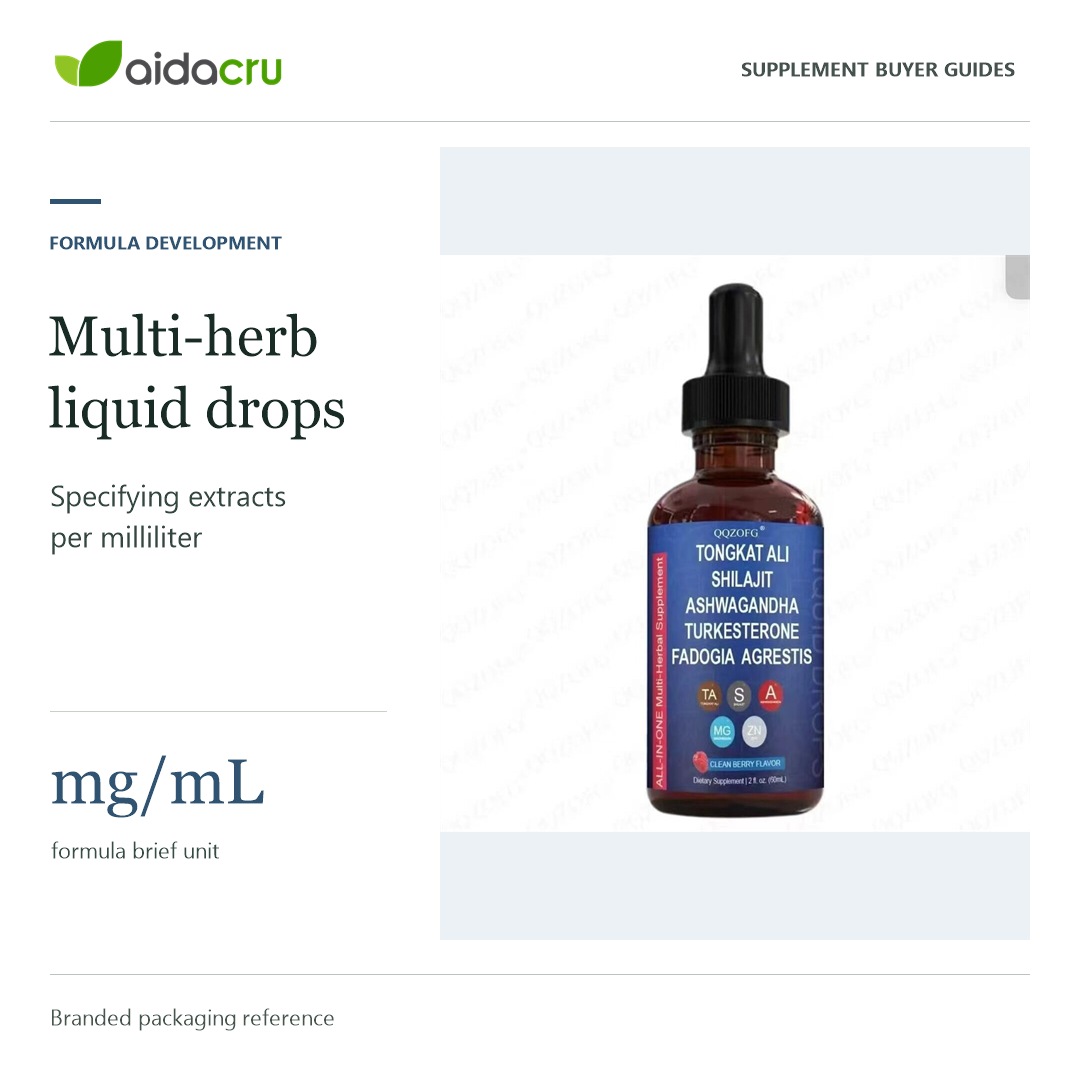
Packaging reference: a QQZOFG-branded bottle. The 60 mL marking describes the bottle contents. For a stock order, request the specification and complete label for the lot Aidacru is quoting.
Which ingredient details belong in a liquid supplement brief?
The reference label names tongkat ali, shilajit, ashwagandha, turkesterone and Fadogia agrestis. Those names give a product developer a starting list. The formula team still needs to know exactly which material to source, how the supplier expresses its strength and what amount belongs in one serving.
For a botanical extract, specify the botanical identity, part used, ingredient form and any required extract ratio or marker specification. For shilajit, request its source, material specification and form. For an ingredient identified by a constituent name such as turkesterone, ask whether the quoted amount describes the constituent itself or the weight of a material that contains it. Carry the same basis of measurement through the brief, quotation and sample review.
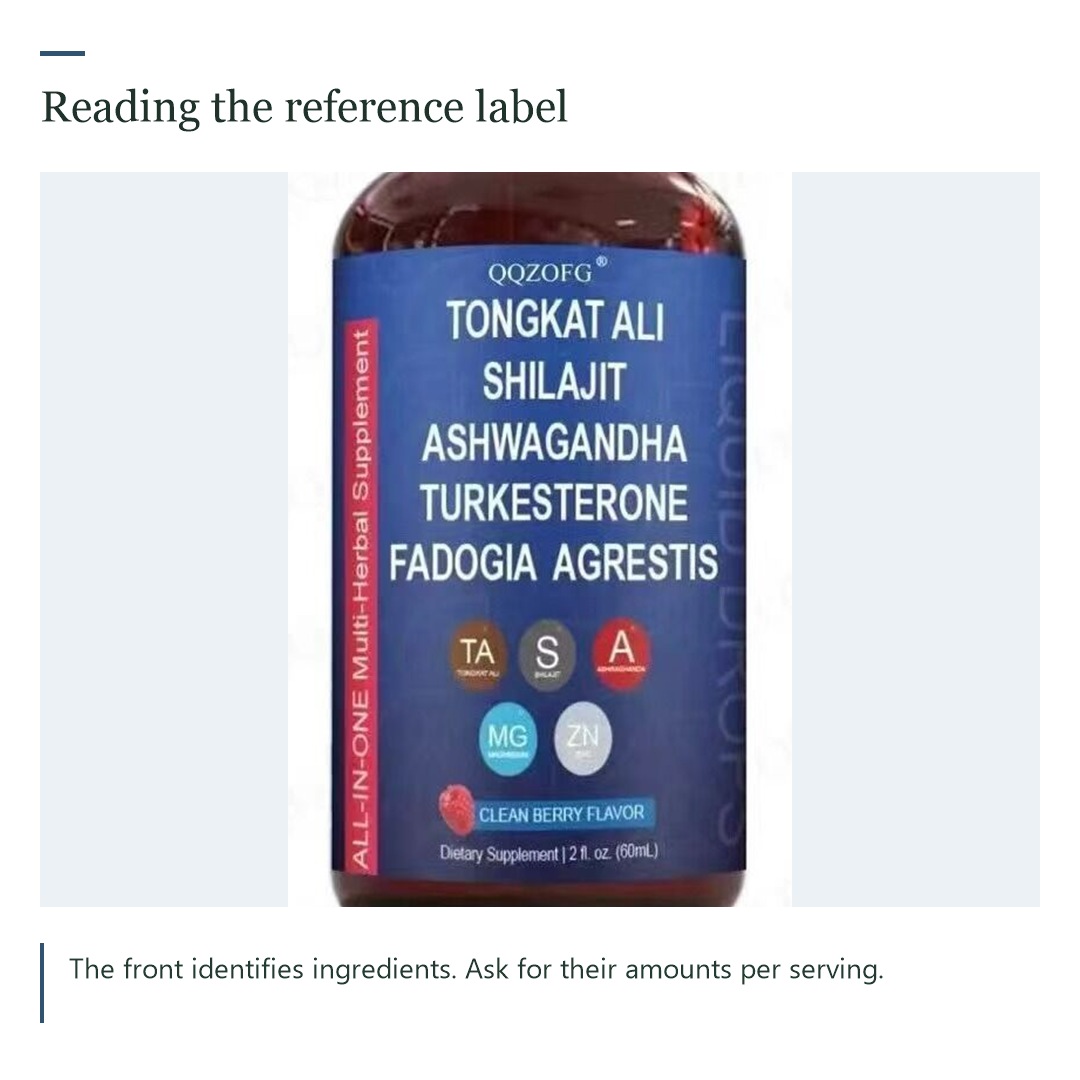
The front panel supplies names. Use the full ingredient specification to check the source material and amount behind each name.
How do you convert mg per serving to mg per mL?
Concentration (mg/mL) = ingredient amount per serving (mg) ÷ serving volume (mL). Use both numbers from the same version of the specification. If a supplier reports a raw-material equivalent, ask for the actual extract weight before comparing it with a figure expressed as milligrams of extract.
Consider two hypothetical quotes for the same extract specification. These figures illustrate the purchasing calculation only.
| Quote | Extract per serving | Serving volume | Calculated extract concentration |
|---|---|---|---|
| A | 40 mg | 2 mL | 20 mg/mL |
| B | 40 mg | 1 mL | 40 mg/mL |
Both quotes list 40 mg per serving, but the second asks the manufacturer to put twice as much extract in each milliliter. That difference belongs in the sample brief because the formulation team needs to evaluate the proposed concentration, carrier and flavor together. The numbers in the example do not describe the pictured formula.
What should the team check with the first dropper sample?
- Match the sample to a dated specification. Record each ingredient, its measurement basis and its declared amount per serving. Keep the sample identifier with the corresponding label version.
- Measure the proposed serving. Ask the supplier to show how the specified volume is measured with the supplied dispenser. Check the actual device and the written directions together.
- Review the liquid in the intended bottle. Compare appearance, pour behavior and flavor against the brief. Record any settling after a defined rest period and how the liquid behaves when mixed according to the proposed directions.
- Document the order scope. For stock, obtain the current lot, full label, available bottle count, expiry and packaging details. For a custom formula, state the proposed composition, fill volume, carrier preferences, target market and first-order quantity. Ask the supplier to identify any items requiring sample work.
Buyer FAQ
What ingredient information does a manufacturer need for a first review?
List one ingredient per row, including the exact material, source or botanical part where relevant, extract strength and target amount. Clearly identify which details are still open for supplier proposals.
Can a 60 mL bottle tell us the serving volume?
A 60 mL fill tells you the total volume. Obtain the serving volume from the full label or approved specification before calculating servings per bottle.
How should a buyer compare a blend total with individual extract concentrations?
Calculate an individual concentration only when its ingredient amount and serving volume are known. A total blend weight supports a blend-level calculation, while the share of each component remains unspecified.
Will one full dropper measure the proposed serving?
That depends on the supplied dispenser. Request a unit to inspect and confirm the marked or otherwise specified volume under the intended directions.
What should we send to get a stock quote?
Give Aidacru the destination market, desired quantity and required delivery window. Request the offered lot’s full label and specification so your purchasing team can approve the exact product quoted.
Key takeaways
Compare each extract on the same weight basis, express the serving in mL and check the measurement against the physical sample. For a first stock order, attach the offered lot specification to the purchase order. For a new formula, attach the target concentrations to the sampling brief.
Send Aidacru your ingredient list, preferred serving volume and target bottle size, or ask for the specification of the current stock lot. Discuss a multi-herb liquid sample or stock quote