

GLP-1 medications have changed the weight-management market, and supplement brands are racing to build companion products. The opportunity is real, but the language must be careful. A dietary supplement should not claim to treat drug side effects. The safer B2B angle is formula support for digestive comfort, daily nutrition gaps, protein intake, hydration and routine consistency.
This guide supports the broader GLP-1 companion supplements pillar by focusing on digestive support formula architecture.
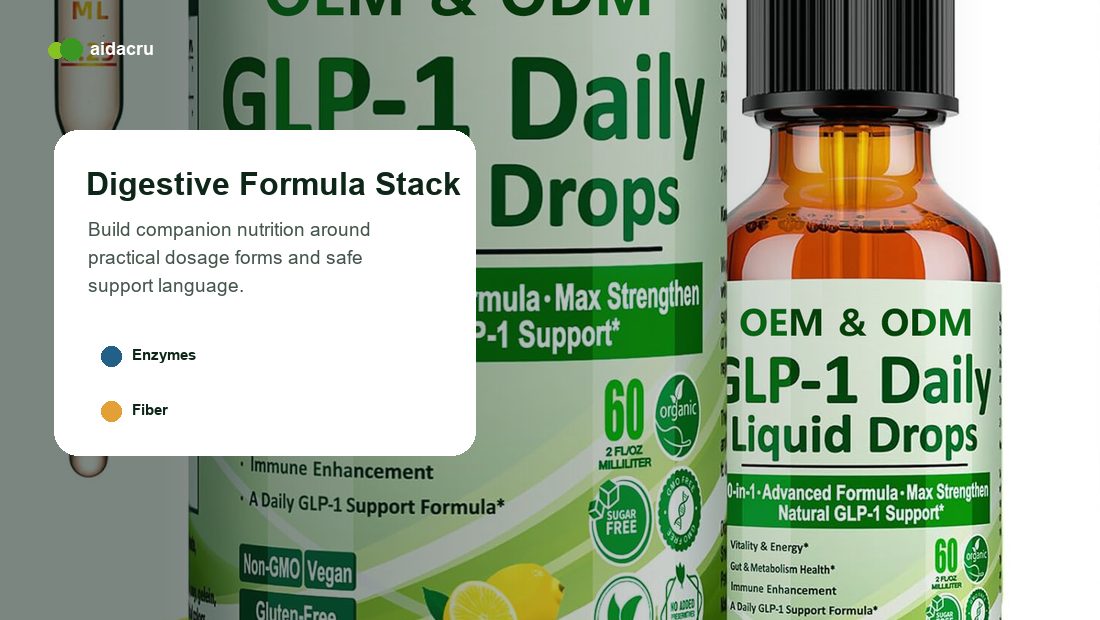
What Buyers Should Know
| Formula route | Buyer intent | OEM notes |
|---|---|---|
| Digestive enzymes | Meal comfort support and protein/fat/carbohydrate digestion support. | Choose enzyme spectrum, activity units and capsule vs powder route carefully. |
| Probiotics | Gut ecosystem and regularity support. | Strain selection, CFU target, stability and packaging matter. |
| Fiber | Daily regularity and satiety-adjacent support. | Solubility, texture, gas tolerance and serving size control product experience. |
| Electrolytes | Hydration support for lower food intake routines. | Powder stick packs and gummies can work, but mineral taste must be managed. |
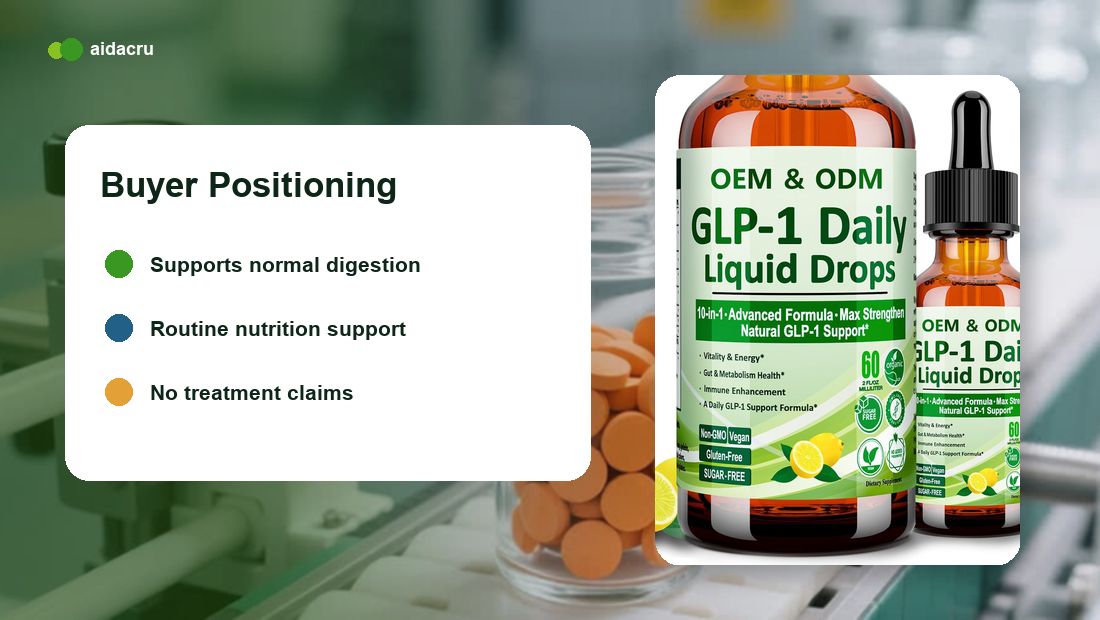
Why Digestive Enzymes Are a Fast-Moving Companion Category
Digestive enzymes are attractive because the benefit story is easy to understand. A broad-spectrum enzyme blend can be positioned around supporting normal digestion of proteins, fats and carbohydrates. Brands should specify enzyme activity units rather than only listing ingredient weight. The difference matters for quality review and consumer trust.
Probiotics: Do Not Sell CFU Alone
For a GLP-1 companion concept, probiotics should not be treated as a generic high-CFU label claim. Strain fit, survivability, water activity, packaging and expiration CFU all matter. Capsules may be simpler for stability; gummies and powders require more careful protection and testing.
Fiber: The Serving Size Reality Check
Fiber sounds simple until a brand tries to put meaningful amounts into a gummy or capsule. Powders and stick packs usually carry fiber more efficiently, but flavor, mouthfeel and digestive tolerance need testing. A formula that looks good in a spreadsheet can fail because the serving size is not pleasant.
Three Product Concepts Brands Can Build
| Concept | Primary buyer | Best format |
|---|---|---|
| Daily Digestive Enzyme Capsules | Adults seeking easy meal-routine support. | Capsule or tablet. |
| Probiotic + Fiber Stick Packs | Subscription brands and wellness routines. | Powder stick pack. |
| Hydration + Micronutrient Gummies | Brands targeting convenience and repeat use. | Gummy or chewable. |
Compliance-Safe Positioning
Recommended language includes "supports normal digestion," "supports gut health," "formulated for daily nutrition routines," and "supports hydration." Avoid language that says the supplement treats nausea, cures constipation, prevents side effects or replaces medical advice.
How Aidacru Supports GLP-1 Companion OEM Projects
Aidacru can help brands compare enzyme blends, probiotic formats, fiber types, electrolyte systems, taste masking, packaging and sample routes. For related product routes, see probiotics product options, creatine product options, and Supplement Product Solutions.
Related Aidacru links: GLP-1 companion pillar, GLP-1 product category, Request GLP-1 companion formula support.
FAQ
What ingredients fit a GLP-1 digestive support supplement?
Common companion formula routes include digestive enzymes, probiotics, gentle fiber, electrolytes and micronutrients. The final formula should match dosage form, claims and buyer positioning.
Can supplements treat GLP-1 side effects?
Dietary supplements should not be positioned as treating medication side effects. Brands should use safer language around normal digestion, gut health, hydration and nutrition routine support.
Can Aidacru manufacture GLP-1 companion supplements?
Yes. Aidacru supports OEM/ODM GLP-1 companion supplement concepts including capsules, powders, gummies, hydration formats, probiotics and digestive-support formulas.