

Why Raw-Material COAs Aren’t Enough for Finished Dietary Supplements
Date: 2026-08-21 Categories: Supplement Blog Hits: 372
A raw-material COA can show that an ingredient lot met selected specifications. It cannot, by itself, show that the finished supplement was manufactured, packaged, and released correctly.
Buyer Answer
Finished-product release is not a single lab result. It connects supplier qualification, component specifications, in-process controls, finished-product specifications, representative sampling, appropriate tests or examinations, batch records, packaging and label checks, deviations, and quality-control review.
The method also has to fit the finished dosage form. A procedure that works well for a purified raw material may not perform the same way in a gummy, botanical blend, oil softgel, mineral tablet, flavored powder, or multi-ingredient capsule.
A COA is evidence within the quality system. It is not the quality system.
Raw-Material COA vs. Finished-Product Release
These documents and decisions serve different purposes:
| Document or Decision | Main Purpose | What It Does Not Prove by Itself |
|---|---|---|
| Component specification | Defines requirements for an incoming ingredient or other component | That the received lot was evaluated correctly or that the finished product meets specifications |
| Raw-material COA | Reports results for a sample from a specific ingredient lot | Distribution, processing outcome, packaging, label accuracy, or finished-batch compliance |
| Finished-product specification | Defines required attributes for the finished dietary supplement | That a particular batch passed |
| Finished-product COA or test report | Reports selected results for a finished-batch sample | Complete production history, all in-process controls, deviation disposition, or final approval |
| Final QA release | Documents the quality unit’s disposition after reviewing applicable specifications, records, results, packaging, labels, and deviations | Future shelf-life performance unless supported by an appropriate stability program |
What U.S. Dietary Supplement CGMP Requires
Under 21 CFR Part 111, manufacturers establish specifications for components, in-process stages as needed, finished dietary supplements, and packaging and labels. The rule requires verification of selected finished-product specifications using appropriate tests or examinations, unless a documented exemption and scientifically valid alternative basis applies.
The quality-control unit reviews and approves or rejects processes, specifications, controls, tests, examinations, deviations, and finished batches as required by the rule.
This framework does not create one universal test panel for every supplement. It is inaccurate to say that every dietary supplement must use the same finished-product tests, the same limits, or an every-active/every-batch approach. The actual control plan depends on the formula, process, risk, available science, claims, target market, and documented strategy.
Why a Raw-Material Method May Not Work on the Finished Product
The finished product has a matrix
The matrix is everything in the dosage form besides the analyte being measured. It can include other actives, carriers, sweeteners, flavors, colors, oils, proteins, fibers, minerals, botanicals, capsule shells, gummy polymers, and coatings.
These components can interfere with extraction, separation, detection, recovery, or interpretation.
A result can look low or high for the wrong reason if the method does not adequately recover or distinguish the target in that specific matrix.
Sample preparation changes the result
A tablet may need grinding. A softgel may require separate treatment of shell and fill. A gummy can be difficult to dissolve or homogenize. An oil may require a different solvent system. Botanical blends may contain compounds with similar analytical behavior.
Simply naming the instrument—HPLC, ICP-MS, GC, or something else—does not establish method suitability. Sample preparation and interference control are part of the method too.
The target may exist in different forms
Vitamins, minerals, botanicals, and other ingredients may occur as different chemical forms, isomers, salts, complexes, or marker compounds. The label declaration and finished-product specification need to match what the method actually measures.
A technically accurate result for the wrong chemical form may still fail to answer the actual label or release question.
Processing can affect recoverability or stability
Heat, pH, oxygen, light, moisture, compression, and ingredient interactions can change an analyte or make it harder to extract from the finished dosage form.
Using the correct input amount is important, but it does not by itself prove the final measured composition.

What Makes a Test Method Suitable?
Method suitability means that the procedure is appropriate for the analyte, matrix, concentration, purpose, and acceptance criteria.
A review may consider:
Selectivity or specificity: Can the method distinguish the target from other components?
Accuracy or recovery: Does sample preparation recover an appropriate amount from the matrix?
Precision: Are repeat results sufficiently consistent for the intended decision?
Analytical range: Does the method perform around the expected concentration?
Limit of quantitation: Can the method measure the required level with suitable performance?
Linearity or calibration fit: Does instrument response support quantitation over the relevant range?
Robustness: Do small, realistic method changes alter the conclusion?
Matrix verification: Has the method been demonstrated on a sufficiently similar finished product?
Not every test requires the same validation package. A compendial method, official method, laboratory-developed method, modified method, or supplier method may require a different level of verification. The practical question is whether the laboratory can support the intended use in the finished product.
Finished-Product Testing by Dosage Form
| Dosage Form | Matrix or Sampling Challenge | Possible Product-Specific Checks |
|---|---|---|
| Multi-ingredient powder | Segregation, scoop variability, flavor and mineral interference | Assay or composition, representative sampling, moisture-related attributes, microbiology, fill weight |
| Capsule | Shell and fill separation, low-dose distribution, hygroscopicity | Fill weight, count, identity or assay, disintegration or dissolution where appropriate, moisture, microbiology |
| Tablet or effervescent tablet | Compression, coating, low moisture, extraction from compacted matrix | Weight, hardness, friability, disintegration, assay, moisture-related attributes, package checks |
| Gummy | Difficult homogenization, water, sugar or polyol matrix, heat exposure | Assay with recovery work, water activity or moisture, microbiology, count, weight, texture-related criteria |
| Softgel | Oil matrix, shell and fill, oxidation, cross-linking | Fill weight, assay, oxidation markers where relevant, leakage, rupture or dissolution, package integrity |
| Liquid | Suspension settling, preservative system, container interaction | Fill volume, homogeneity, assay, pH, microbiology, preservative or stability checks as justified |
This is a planning table, not a mandatory universal test panel.
Representative Sampling Comes Before the Instrument
Even a strong analytical method gives limited information if the sample submitted to the laboratory does not represent the batch.
A sampling plan may need to consider:
Batch size and process flow.
Where segregation or variation could occur.
Start, middle, and end of filling where relevant.
Number and size of increments or finished units.
Whether samples are tested individually or combined.
Sample handling, storage, and chain of custody.
Statistical and risk-based justification.
U.S. dietary supplement CGMP requires representative samples and documented quality-control responsibilities. It does not impose one universal composite-sampling rule for every finished product.
The better buyer question is not simply, “How many bottles go to the lab?” It is, “Why does this sampling plan represent the batch?”
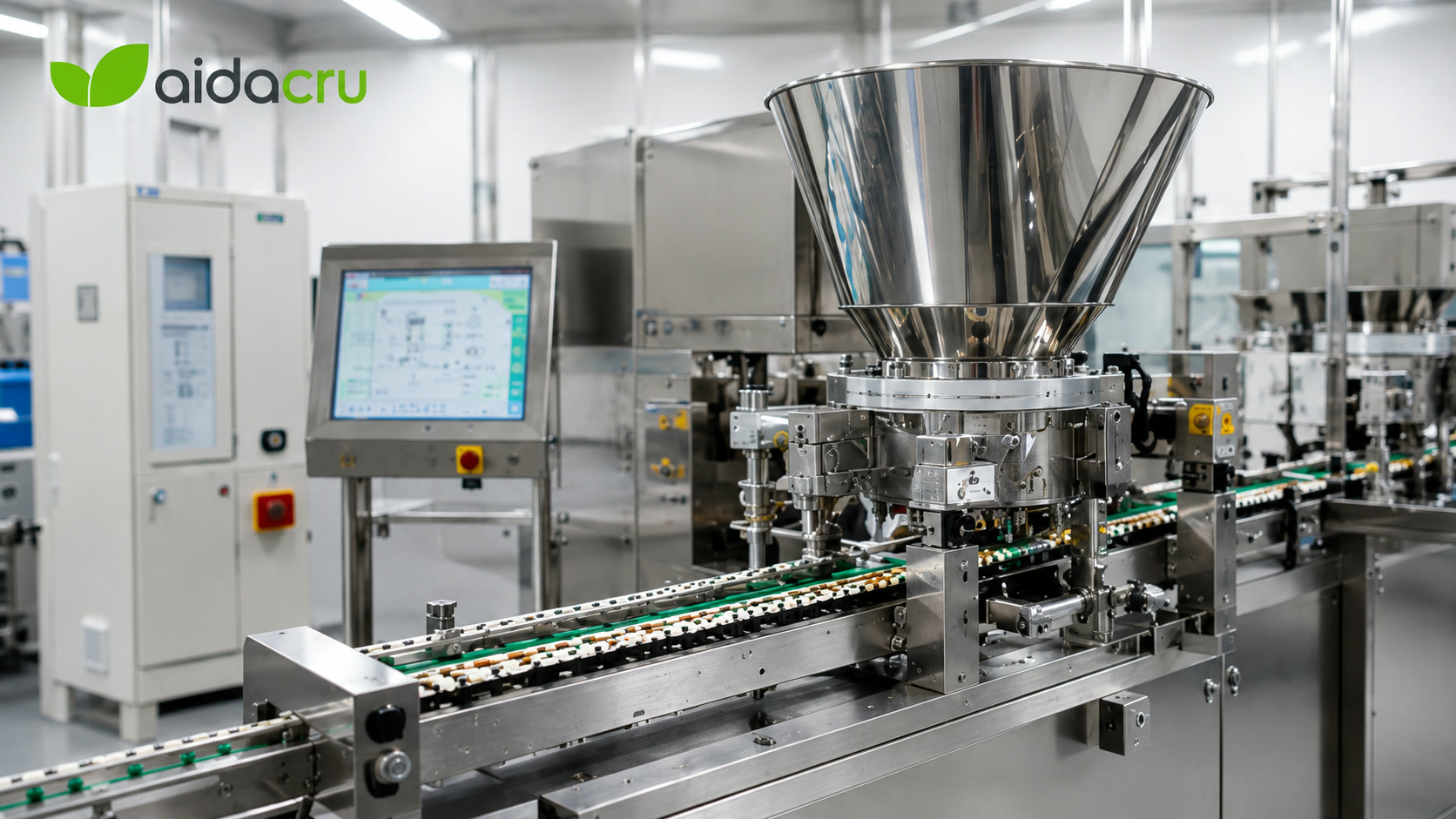
From Ingredients to Final QA Release
1. Establish component requirements
Define identity and other relevant specifications for dietary ingredients, excipients, and packaging components. Qualify suppliers and determine which supplier documents will be accepted and verified.
2. Receive and evaluate component lots
Match each lot to the purchase and specification. Review COAs and conduct required tests or examinations. Resolve discrepancies before the material enters production.
3. Manufacture against the master manufacturing record
The master manufacturing record defines the formula, theoretical yield, processing instructions, packaging, labels, and other controls. The batch production record documents what actually happened.
4. Perform in-process controls
Depending on the dosage form, controls may address mixing, fill weight, tablet properties, temperature, time, pH, moisture, packaging, or other process variables.
5. Collect representative samples
Samples should be collected according to written procedures and should represent the material or finished batch being evaluated.
6. Run appropriate tests or examinations
Use methods suitable for the specification, analyte, matrix, range, and release purpose. Unexpected or out-of-specification results should be investigated rather than repeatedly tested until a passing result appears.
7. Review the complete batch package
Quality control reviews applicable production records, specifications, results, packaging and label checks, deviations, reprocessing or adjustments, and other required records.
8. Approve or reject the batch
Final release is a documented disposition decision. It should not occur simply because a laboratory PDF arrived.
Define the Testing Plan Before Quotation
Testing cost and turnaround time can materially affect a launch. Leaving the plan until the finished batch is waiting for release can create avoidable cost and schedule changes.
Before quotation, align on:
Target market and retailer or marketplace requirements.
Formula with exact ingredient forms and label amounts.
Dosage form, serving size, and package.
Proposed label claims and shelf-life statement.
Required component documents.
Third-party laboratory or accreditation requirements.
Tests requested for each batch, periodically, or during stability.
Responsibility for method development, verification, and investigations.
Sample quantity and retain-sample expectations.
Acceptance criteria and approval authority.
The brand and manufacturer should understand what is included in the commercial quote and what requires separate laboratory work.
Pre-Production Testing Checklist
Finished-product specification drafted before bulk production.
Raw-material COAs matched to actual lots.
Identity-testing responsibility defined.
In-process controls connected to the dosage form.
Representative sampling plan documented.
Finished-product methods checked for matrix suitability.
Laboratory, turnaround time, and cost confirmed.
Packaging and label checks included in release review.
Deviation and out-of-specification responsibilities defined.
Final QA release authority identified.
FAQ
Is a raw-material COA enough to release a dietary supplement?
No. It provides information about a component lot. Finished release also depends on product specifications, manufacturing and packaging records, in-process controls, representative sampling, appropriate tests or examinations, and quality-control review.
Does FDA require every active ingredient to be tested in every finished batch?
The dietary supplement CGMP rule requires verification of selected finished-product specifications and documented support for the control system. The exact plan is product-specific; it is not one universal every-active, every-batch rule.
What is the difference between a finished-product specification and a COA?
The specification defines what the product must meet. A COA or test report records results from a particular sample or batch against selected specifications.
Can the same HPLC method be used for raw materials and gummies?
Not automatically. The gummy matrix, sample preparation, analyte form, concentration, and interferences may require verification, modification, or a different method.
Is finished-product testing the same as final QA release?
No. Testing produces evidence. Final QA release is the documented decision made after reviewing the applicable results, records, packaging, labels, and deviations.
When should testing requirements be agreed?
Before quotation and bulk production. Early alignment helps the brand understand cost, sample quantity, method requirements, release timing, and responsibility for investigations.
Bottom Line
A raw-material COA answers a component question, not a finished-product release question. The finished specification, sampling plan, analytical method, records, packaging and label review, and QA disposition all play different roles. Testing provides evidence; release is the documented decision built from that evidence.
Discuss a Finished-Product Testing Plan
Planning a new supplement launch or scale-up? Send Aidacru the formula, ingredient forms, dosage form, serving size, target market, label direction, package, retailer requirements, forecast, and requested tests. The review can identify open specification, method, laboratory, sampling, release, and quotation questions before bulk production.
For related guidance, see the Aidacru Quality Control Checklist and private-label supplement manufacturing, or contact the team with the testing brief.
Technical References
U.S. FDA, Dietary Supplement CGMP Small Entity Compliance Guide: https://www.fda.gov/regulatory-information/search-fda-guidance-documents/small-entity-compliance-guide-current-good-manufacturing-practice-manufacturing-packaging-labeling
U.S. FDA, Dietary Supplement Compliance Program 7321.008: https://www.fda.gov/files/food/published/CP7321.008-DietarySupplements-09182024.pdf
AOAC Appendix K, Guidelines for Dietary Supplements and Botanicals: https://academic.oup.com/jaoac/article/95/1/268/5655327
AOAC International, Standard Method Performance Requirements resources: https://www.aoac.org/scientific-solutions/standards-and-official-methods/